Heh.
The silliness of some who posited that "evolution" was consonant with Roman Catholic teachings has been soundly whacked by a Big Hitter Cardinal:
An influential cardinal in the Roman Catholic Church, which has long been regarded as an ally of the theory of evolution, is now suggesting that belief in evolution as accepted by science today may be incompatible with Catholic faith. (New York Times, 7/7/05)
The cardinal, Christoph Schönborn, archbishop of Vienna, a theologian who is close to Pope Benedict XVI, staked out his position in an Op-Ed article in The New York Times on Thursday, writing, "Evolution in the sense of common ancestry might be true, but evolution in the neo-Darwinian sense - an unguided, unplanned process of random variation and natural selection - is not."
In a telephone interview from a monastery in Austria, where he was on retreat, the cardinal said that his essay had not been approved by the Vatican, but that two or three weeks before Pope Benedict XVI's election in April, he spoke with the pope, then Cardinal Joseph Ratzinger, about the church's position on evolution. "I said I would like to have a more explicit statement about that, and he encouraged me to go on," said Cardinal Schönborn.
He said that he had been "angry" for years about writers and theologians, many Catholics, who he said had "misrepresented" the church's position as endorsing the idea of evolution as a random process.
Opponents of Darwinian evolution said they were gratified by Cardinal Schönborn's essay. But scientists and science teachers reacted with confusion, dismay and even anger. Some said they feared the cardinal's sentiments would cause religious scientists to question their faiths.
Cardinal Schönborn, who is on the Vatican's Congregation for Catholic Education, said the office had no plans to issue new guidance to teachers in Catholic schools on evolution. But he said he believed students in Catholic schools, and all schools, should be taught that evolution is just one of many theories. Many Catholic schools teach Darwinian evolution, in which accidental mutation and natural selection of the fittest organisms drive the history of life, as part of their science curriculum.
Darwinian evolution is the foundation of modern biology. While researchers may debate details of how the mechanism of evolution plays out, there is no credible scientific challenge to the underlying theory.
American Catholics and conservative evangelical Christians have been a potent united front in opposing abortion, stem cell research and euthanasia, but had parted company on the death penalty and the teaching of evolution. Cardinal Schönborn's essay and comments are an indication that the church may now enter the debate over evolution more forcefully on the side of those who oppose the teaching of evolution alone.
One of the strongest advocates of teaching alternatives to evolution is the Discovery Institute in Seattle, which promotes the idea, termed intelligent design, that the variety and complexity of life on earth cannot be explained except through the intervention of a designer of some sort.
Mark Ryland, a vice president of the institute, said in an interview that he had urged the cardinal to write the essay. Both Mr. Ryland and Cardinal Schönborn said that an essay in May in The Times about the compatibility of religion and evolutionary theory by Lawrence M. Krauss, a physicist at Case Western Reserve University in Cleveland, suggested to them that it was time to clarify the church's position on evolution.
The cardinal's essay was submitted to The Times by a Virginia public relations firm, Creative Response Concepts, which also represents the Discovery Institute.
Mr. Ryland, who said he knew the cardinal through the International Theological Institute in Gaming, Austria, where he is chancellor and Mr. Ryland is on the board, said supporters of intelligent design were "very excited" that a church leader had taken a position opposing Darwinian evolution. "It clarified that in some sense the Catholics aren't fine with it," he said.
Bruce Chapman, the institute's president, said the cardinal's essay "helps blunt the claims" that the church "has spoken on Darwinian evolution in a way that's supportive."
But some biologists and others said they read the essay as abandoning longstanding church support for evolutionary biology. How did the Discovery Institute talking points wind up in Vienna?" wondered Glenn Branch, deputy director of the National Center for Science Education, which advocates the teaching of evolution. "It really did look quite a bit as if Cardinal Schönborn had been reading their Web pages."
Mr. Ryland said the cardinal was well versed on these issues and had written the essay on his own.
Dr. Francis Collins, who headed the official American effort to decipher the human genome, and who describes himself as a Christian, though not a Catholic, said Cardinal Schönborn's essay looked like "a step in the wrong direction" and said he feared that it "may represent some backpedaling from what scientifically is a very compelling conclusion, especially now that we have the ability to study DNA."
"There is a deep and growing chasm between the scientific and the spiritual world views," he went on. "To the extent that the cardinal's essay makes believing scientists less and less comfortable inhabiting the middle ground, it is unfortunate. It makes me uneasy."
"Unguided," "unplanned," "random" and "natural" are all adjectives that biologists might apply to the process of evolution, said Dr. Kenneth R. Miller, a professor of biology at Brown and a Catholic. But even so, he said, evolution "can fall within God's providential plan." He added: "Science cannot rule it out. Science cannot speak on this."
Dr. Miller, whose book "Finding Darwin's God" describes his reconciliation of evolutionary theory with Christian faith, said the essay seemed to equate belief in evolution with disbelief in God. That is alarming, he said. "It may have the effect of convincing Catholics that evolution is something they should reject."
Dr. Collins and other scientists said they could understand why a cleric might want to make the case that, as Dr. Collins put it, "evolution is the mechanism by which human beings came into existence, but God had something to do with that, too." Dr. Collins said that view, theistic evolution, "is shared with a very large number of biologists who also believe in God, including me."
But it does not encompass the idea that the workings of evolution required the direct intervention of a supernatural agent, as intelligent design would have it.
In his essay, Cardinal Schönborn asserted that he was not trying to break new ground but to correct the idea, "often invoked," that the church accepts or at least acquiesces to the theory of evolution.
He referred to widely cited remarks by Pope John Paul II, who, in a 1996 address to the Pontifical Academy of Sciences, noted that the scientific case for evolution was growing stronger and that the theory was "more than a hypothesis."
In December, Bishop Francis X. DiLorenzo, chairman of the Committee on Science and Human Values of the United States Conference of Catholic Bishops, cited those remarks in writing to the nation's bishops that "the Church does not need to fear the teaching of evolution as long as it is understood as a scientific account of the physical origins and development of the universe." But in his essay, Cardinal Schönborn dismissed John Paul's statement as "rather vague and unimportant."
Francisco Ayala, a professor of biology at the University of California, Irvine, and a former Dominican priest, called this assessment "an insult" to the late pope and said the cardinal seemed to be drawing a line between the theory of evolution and religious faith, and "seeing a conflict that does not exist."
Dr. Miller said he was already hearing from people worried about the cardinal's essay. "People are saying, does the church really believe this?" He said he would not speculate. "John Paul II made it very clear that he regarded scientific rationality as a gift from God," Dr. Miller said, adding, "There are more than 100 cardinals and they often have conflicting opinions."
Saturday, July 09, 2005


Citgo: Enemy of the US
Courtesy of Random 10 (http://random10.blogspot.com/) we learn:
“Looking for an easy way to protest Bush foreign policy week after week? And an easy way to help alleviate global poverty? Buy your gasoline at Citgo stations.
Citgo is a U.S. refining and marketing firm that is a wholly owned subsidiary of Venezuela's state-owned oil company. Money you pay to Citgo goes primarily to Venezuela -- not Saudi Arabia or the Middle East."
This "action" is being encouraged by a certain Jeff Cohen, a rad-left type who founded Fairness and Accuracy in Media.
Well, since Venezuela's Commie-lite dictator (c'mon--we all know it's a pretend-democracy) is tight-to-the-butt with Fidel and the ChiComs, I look at Citgo in a whole new way...
“Looking for an easy way to protest Bush foreign policy week after week? And an easy way to help alleviate global poverty? Buy your gasoline at Citgo stations.
Citgo is a U.S. refining and marketing firm that is a wholly owned subsidiary of Venezuela's state-owned oil company. Money you pay to Citgo goes primarily to Venezuela -- not Saudi Arabia or the Middle East."
This "action" is being encouraged by a certain Jeff Cohen, a rad-left type who founded Fairness and Accuracy in Media.
Well, since Venezuela's Commie-lite dictator (c'mon--we all know it's a pretend-democracy) is tight-to-the-butt with Fidel and the ChiComs, I look at Citgo in a whole new way...
NARAL Comes Out
Right from NARAL's website to your children... (http://www.wanaral.org/s01takeaction/200506101.shtml)
(HT to Amy Wellborn, NRO's "Corner.")
Rome to Bishops: No More Homo Seminarians
After who-knows-how many $gazillion in settlements, Church authorities in Rome have re-stated a 1961 prohibition on the formation and ordination of homosexuals.
Briefly, the document says Just Say NO.
The whining and prancing crowd just can't STAND it. Here's John Allen's report:
Sources indicate that the long-awaited Vatican document on the admission of homosexuals to seminaries is now in the hands of Pope Benedict XVI. The document, which has been condensed from earlier versions, reasserts the response given by the Congregation for Divine Worship and the Discipline of the Sacraments in 2002, in response to a dubium submitted by a bishop on whether a homosexual could be ordained: "A homosexual person, or one with a homosexual tendency, is not fit to receive the sacrament of Holy Orders."
That reply was published in the November-December 2002 issue of Notitiae, the official publication of the congregation.
It is up to Benedict XVI to decide whether to issue the new document as it stands, to send it back for revision, or to shelve it on the basis that for now such a document is "inopportune."
Several American bishops were in Rome last week for the June 29 pallium ceremony, and I spoke to some of them about the document.
Privately, some hope Benedict will decide to put the document in a desk drawer for the time being, on the grounds that it will generate controversy and negative press without changing anything in terms of existing discipline.
Controversy? Negative Press? About what, exactly?
As one bishop put it to me, the policy against ordaining homosexuals is already clear -- the only interesting question is, what do you mean by a "homosexual"? At one end of the continuum, it could refer to anyone who once had a fleeting same-sex attraction; at another, it could be restricted to someone who is sexually active and openly part of a "gay pride" movement. Most people would exclude those extremes, but where is the line drawn in between?
"Oh, my dear, it's so AWFUL to have to figure this out. I just don't KNOW what I can DO....."
Vatican sources have made clear the document will not enter into these details, and hence this bishop believes it's an unneeded headache.
Further, the bishop said, the document may make candidates less likely to be honest with formation directors about their psycho-sexual development, even though some degree of experimentation and ambivalence about orientation is not unusual, and by itself should not disqualify potential priests.
Now that's a ridiculous pile of crap.
"The risk is that we drive the conversation underground," he said.
Yes. With a silver stake through its heart, Your Excellency (or Your Grace-in-Lace.)
Others, however, hold that the document is needed for two reasons.
One, it will come with a higher level of authority than a response to a dubium published in the bulletin of a curial agency. This document will come with the clear authorization of the pope, perhaps in forma specifica, meaning that it draws on his personal authority. In that sense, the bishop said, it's like the relationship of John Paul's 1994 document Ordinatio sacerdotalis, on women priests, to the 1976 document Inter Insigniores from the Congregation for the Doctrine of the Faith on the same subject. The teaching didn't change, but the level of authority and clarity did.
What this Bishop is saying is that a lot of US Bishops are rebellious, divisive, snippy twerps who will stamp their feet and snivel. By the way, if the Pope signs off, in forma specifica or not, they will continue to snipe, whine, snivel, and pout, don't you know...
Two, the document will reject a solution that some seminaries, religious communities and bishops have tended to adopt in recent years -- that it doesn't matter if a candidate is gay, as long as he's capable of remaining celibate.
Easy to gamble with Other People's Money, eh?
"I suspect some people, in good will, have gravitated to this idea," one bishop said. "But that's not what the church is saying, and this document will make that clear."
To date, there's been no indication of what the pope intends to do.
(http://www.nationalcatholicreporter.org/word/#three)
Briefly, the document says Just Say NO.
The whining and prancing crowd just can't STAND it. Here's John Allen's report:
Sources indicate that the long-awaited Vatican document on the admission of homosexuals to seminaries is now in the hands of Pope Benedict XVI. The document, which has been condensed from earlier versions, reasserts the response given by the Congregation for Divine Worship and the Discipline of the Sacraments in 2002, in response to a dubium submitted by a bishop on whether a homosexual could be ordained: "A homosexual person, or one with a homosexual tendency, is not fit to receive the sacrament of Holy Orders."
That reply was published in the November-December 2002 issue of Notitiae, the official publication of the congregation.
It is up to Benedict XVI to decide whether to issue the new document as it stands, to send it back for revision, or to shelve it on the basis that for now such a document is "inopportune."
Several American bishops were in Rome last week for the June 29 pallium ceremony, and I spoke to some of them about the document.
Privately, some hope Benedict will decide to put the document in a desk drawer for the time being, on the grounds that it will generate controversy and negative press without changing anything in terms of existing discipline.
Controversy? Negative Press? About what, exactly?
As one bishop put it to me, the policy against ordaining homosexuals is already clear -- the only interesting question is, what do you mean by a "homosexual"? At one end of the continuum, it could refer to anyone who once had a fleeting same-sex attraction; at another, it could be restricted to someone who is sexually active and openly part of a "gay pride" movement. Most people would exclude those extremes, but where is the line drawn in between?
"Oh, my dear, it's so AWFUL to have to figure this out. I just don't KNOW what I can DO....."
Vatican sources have made clear the document will not enter into these details, and hence this bishop believes it's an unneeded headache.
Further, the bishop said, the document may make candidates less likely to be honest with formation directors about their psycho-sexual development, even though some degree of experimentation and ambivalence about orientation is not unusual, and by itself should not disqualify potential priests.
Now that's a ridiculous pile of crap.
"The risk is that we drive the conversation underground," he said.
Yes. With a silver stake through its heart, Your Excellency (or Your Grace-in-Lace.)
Others, however, hold that the document is needed for two reasons.
One, it will come with a higher level of authority than a response to a dubium published in the bulletin of a curial agency. This document will come with the clear authorization of the pope, perhaps in forma specifica, meaning that it draws on his personal authority. In that sense, the bishop said, it's like the relationship of John Paul's 1994 document Ordinatio sacerdotalis, on women priests, to the 1976 document Inter Insigniores from the Congregation for the Doctrine of the Faith on the same subject. The teaching didn't change, but the level of authority and clarity did.
What this Bishop is saying is that a lot of US Bishops are rebellious, divisive, snippy twerps who will stamp their feet and snivel. By the way, if the Pope signs off, in forma specifica or not, they will continue to snipe, whine, snivel, and pout, don't you know...
Two, the document will reject a solution that some seminaries, religious communities and bishops have tended to adopt in recent years -- that it doesn't matter if a candidate is gay, as long as he's capable of remaining celibate.
Easy to gamble with Other People's Money, eh?
"I suspect some people, in good will, have gravitated to this idea," one bishop said. "But that's not what the church is saying, and this document will make that clear."
To date, there's been no indication of what the pope intends to do.
(http://www.nationalcatholicreporter.org/word/#three)
Friday, July 08, 2005
NAPA(L)M's Star Lectures in Milwaukee
Fr. Michael Joncas, well-known Modern Hymnist, spoke at the National Assoc'n of Pastoral Musicians (NAPM--or as we know it, NAPALM) Conference held here in Milwaukee last week.
"I believe any style of music may potentially bear the weight of mystery unless proven wrong in practice." he said.
Now one might very well ask: what does THAT mean? Well, maybe this will help:
"People will ask questions about the texts we sing, not about the notes we sing. You have got to look at the words. Was I captivated by the music or by what the music was singing about?"
That's at least partly correct. Text is, indeed, primary. Of course, "rap" music emphasizes text...
Pressing on: Joncas stated that "differences of opinion" have existed for hundreds of years--that in the time of Thomas Aquinas, the argument was 'whether music in itself should be used or not.' This is an interesting take on history. Since numbers of Popes have written on the topic of Sacred Music BEFORE 1200AD, and since St. Augustine and St. Paul BOTH emphasized 'singing Psalms' (etc., etc.) I don't know how Fr. Joncas can state that there was some controversy about the use of song.
But never mind.
According to the report in the Catholic Herald (http://www.chnonline.org/2005-07-07/newsstory1.html), Father went on to clarify which "main ideas" all styles should follow: "...which form actually leads our parish into common prayer," was his answer. Another way to express it: "Whatever turns you on."
Hmmmm.
He went on to explain that 'some parishes prefer to sit and quietly sing along with the hymns, [while] others find themselves moving their entire body and clapping along to the beat, praising with their whole body and mind.' If we ignore the horrific syntax, we get the idea.
Let's set the stage with a couple of definitions. Hymnody, strictly speaking, is a form which is different from chant. It is also different from sacred music. Some hymns, such as the Adoro Te, are thought of as "Chant" because it is included in "Chant" books--but it is a hymn.
Sacred Music differs from hymns by virtue of the text: whereas a hymn is generally composed music with meter specific to the text's meter (you know, "feet" per line), musica sacra is composed using texts from the Mass or from Scripture which are not necessarily metric (e.g. the Gloria from the Mass.)
Basically, Fr. Joncas is addressing hymns, although there's enough imprecision in the news report and in the quotations they provide to speculate that he's also talking about musica sacra.
It seems that Joncas has decided to ignore the 800-pound canary: Pope Pius X's writings on the topic of music for the Church, which do NOT admit of "any style" and which have simply not been abrogated. Pius was quite clear: the music must have form (that is, it has to have artistic integrity), and it must BOTH "edify and sanctify" the Faithful while "glorifying God." Pius X went on to say that the closer church music comes to Gregorian Chant in 'style,' the better it is for worship. While Pius X did not reference Psalm 47/7, Cdl Ratzinger did--and to no one's surprise, the results were the same: "Singing in accordance with wisdom implies a word-oriented art, which is not concerned merely with intelligibility but "stands under the primacy of logos" and makes demands upon our highest moral and spiritual powers. The second translation, artfully, tells us that encountering God challenges a person to respond to the best of his or her abilities. God gave Moses detailed specifications for the tabernacle; artistic endeavor in the book of Exodus is portrayed as a participation in God's creativity."
It should be apparent that SOME "styles" will simply not 'glorify God' and may not 'edify' the Faithful. SOME "styles" will not 'sanctify' the Faithful, either--such as rock'n'roll, whether 'soft' or 'hard.' And some musical offerings simply do not cut the mustard in terms of the artistic requirements.
Fr. Joncas ignores Pius X perhaps because he also hears the footsteps of another Pope--the current one, Benedict XVI, who has made a number of insightful and worthwhile comments on the music/worship situation.
In an article hitting the high points of Cdl. Ratzinger's thoughts on the matter, the author quotes R.: "Music in particular has split into two worlds: pop (a manufactured commodity) and rationally constructed high-brow music (an elite, degenerate form of "classical" music)." In Ratzinger's opinion, NEITHER of these is suitable for church. Fr. Joncas' ouerve of music, by the way, falls largely into the "pop" category...
Even more devastating to Joncas' "whatever turns you on" theory of church music is the following:
"What are the new and better ideas of the liturgical experts? They insist on two basic values: "The 'primary value' of a renewed liturgy is, we are told, 'the full and authentic action of all persons.'" The people of God proclaims its identity in song. The second value judgment follows: music is the power that brings about cohesiveness within the group. Celebration, ergo, becomes creativity; the "how" becomes more important than the "what." "
To this, Ratzinger responds:
In actuality, the Church is the communio sanctorum of all places and all times. Romano Guardini has elaborated upon the momentous consequences of realizing that the communion of saints... is the true subject of the liturgy. The Church's liturgy has an objective and positive character, because it lives in three ontological dimensions: cosmos, history and mystery. Liturgy has a cosmic dimension because as believers we do not create it, but participate in something greater that transcends us all. As a result of its historic dimension, it develops as a living thing while maintaining its identity (cf. the discussion of biblical culture, above). Finally, liturgy's dimension of mystery means that we do not initiate the liturgical event; rather, it originates in a call and a divine act of love, to which our response is obedience.
Finally, the Catechism actually has something to say:
The new Catechism, on the other hand, sums up the best insights of the Liturgical Movement. Liturgy means "service in the name of/on behalf of the people." But "the People of God is not simply there, as the Germans, French, Italians, or other peoples are; it comes into being again and again only through the service of the Son and by his lifting us into the community of God which we cannot enter on our own . . . Every liturgical celebration is an action of Christ the priest and his Body which is the Church (p. 134; cf. CCC 1069-1070)."
Certainly not a "do your own thing" teaching, is it, Father???
"I believe any style of music may potentially bear the weight of mystery unless proven wrong in practice." he said.
Now one might very well ask: what does THAT mean? Well, maybe this will help:
"People will ask questions about the texts we sing, not about the notes we sing. You have got to look at the words. Was I captivated by the music or by what the music was singing about?"
That's at least partly correct. Text is, indeed, primary. Of course, "rap" music emphasizes text...
Pressing on: Joncas stated that "differences of opinion" have existed for hundreds of years--that in the time of Thomas Aquinas, the argument was 'whether music in itself should be used or not.' This is an interesting take on history. Since numbers of Popes have written on the topic of Sacred Music BEFORE 1200AD, and since St. Augustine and St. Paul BOTH emphasized 'singing Psalms' (etc., etc.) I don't know how Fr. Joncas can state that there was some controversy about the use of song.
But never mind.
According to the report in the Catholic Herald (http://www.chnonline.org/2005-07-07/newsstory1.html), Father went on to clarify which "main ideas" all styles should follow: "...which form actually leads our parish into common prayer," was his answer. Another way to express it: "Whatever turns you on."
Hmmmm.
He went on to explain that 'some parishes prefer to sit and quietly sing along with the hymns, [while] others find themselves moving their entire body and clapping along to the beat, praising with their whole body and mind.' If we ignore the horrific syntax, we get the idea.
Let's set the stage with a couple of definitions. Hymnody, strictly speaking, is a form which is different from chant. It is also different from sacred music. Some hymns, such as the Adoro Te, are thought of as "Chant" because it is included in "Chant" books--but it is a hymn.
Sacred Music differs from hymns by virtue of the text: whereas a hymn is generally composed music with meter specific to the text's meter (you know, "feet" per line), musica sacra is composed using texts from the Mass or from Scripture which are not necessarily metric (e.g. the Gloria from the Mass.)
Basically, Fr. Joncas is addressing hymns, although there's enough imprecision in the news report and in the quotations they provide to speculate that he's also talking about musica sacra.
It seems that Joncas has decided to ignore the 800-pound canary: Pope Pius X's writings on the topic of music for the Church, which do NOT admit of "any style" and which have simply not been abrogated. Pius was quite clear: the music must have form (that is, it has to have artistic integrity), and it must BOTH "edify and sanctify" the Faithful while "glorifying God." Pius X went on to say that the closer church music comes to Gregorian Chant in 'style,' the better it is for worship. While Pius X did not reference Psalm 47/7, Cdl Ratzinger did--and to no one's surprise, the results were the same: "Singing in accordance with wisdom implies a word-oriented art, which is not concerned merely with intelligibility but "stands under the primacy of logos" and makes demands upon our highest moral and spiritual powers. The second translation, artfully, tells us that encountering God challenges a person to respond to the best of his or her abilities. God gave Moses detailed specifications for the tabernacle; artistic endeavor in the book of Exodus is portrayed as a participation in God's creativity."
It should be apparent that SOME "styles" will simply not 'glorify God' and may not 'edify' the Faithful. SOME "styles" will not 'sanctify' the Faithful, either--such as rock'n'roll, whether 'soft' or 'hard.' And some musical offerings simply do not cut the mustard in terms of the artistic requirements.
Fr. Joncas ignores Pius X perhaps because he also hears the footsteps of another Pope--the current one, Benedict XVI, who has made a number of insightful and worthwhile comments on the music/worship situation.
In an article hitting the high points of Cdl. Ratzinger's thoughts on the matter, the author quotes R.: "Music in particular has split into two worlds: pop (a manufactured commodity) and rationally constructed high-brow music (an elite, degenerate form of "classical" music)." In Ratzinger's opinion, NEITHER of these is suitable for church. Fr. Joncas' ouerve of music, by the way, falls largely into the "pop" category...
Even more devastating to Joncas' "whatever turns you on" theory of church music is the following:
"What are the new and better ideas of the liturgical experts? They insist on two basic values: "The 'primary value' of a renewed liturgy is, we are told, 'the full and authentic action of all persons.'" The people of God proclaims its identity in song. The second value judgment follows: music is the power that brings about cohesiveness within the group. Celebration, ergo, becomes creativity; the "how" becomes more important than the "what." "
To this, Ratzinger responds:
In actuality, the Church is the communio sanctorum of all places and all times. Romano Guardini has elaborated upon the momentous consequences of realizing that the communion of saints... is the true subject of the liturgy. The Church's liturgy has an objective and positive character, because it lives in three ontological dimensions: cosmos, history and mystery. Liturgy has a cosmic dimension because as believers we do not create it, but participate in something greater that transcends us all. As a result of its historic dimension, it develops as a living thing while maintaining its identity (cf. the discussion of biblical culture, above). Finally, liturgy's dimension of mystery means that we do not initiate the liturgical event; rather, it originates in a call and a divine act of love, to which our response is obedience.
Finally, the Catechism actually has something to say:
The new Catechism, on the other hand, sums up the best insights of the Liturgical Movement. Liturgy means "service in the name of/on behalf of the people." But "the People of God is not simply there, as the Germans, French, Italians, or other peoples are; it comes into being again and again only through the service of the Son and by his lifting us into the community of God which we cannot enter on our own . . . Every liturgical celebration is an action of Christ the priest and his Body which is the Church (p. 134; cf. CCC 1069-1070)."
Certainly not a "do your own thing" teaching, is it, Father???
Dennis, Bush, Gitmo, Rove
So when Dennis hits Gitmo (and it will), how long will it take the DUmmies to blame it on Bush, who is covering for Rove?
Vatican to Whack Pro-Abort "Catholic" Pols
Dave Obey won't concern himself with this, of course---
The Catholic Church has produced a new document for bishops across the world to examine that says Catholics who support legalized abortion should refrain from taking communion because they are out of step with church teachings. The Vatican said pro-abortion Catholics are not taking their faith seriously and those who take communion and support abortion are behaving in a scandalous manner.
As most of us recall, only a couple of Bishops around the country told John Kerry not to bother showing up for Communion during his campaign.
But few recall that it was Bp. Burke (at that time he was in LaCrosse) who really started the controversy by delivering a smackdown letter to Dave Obey and a couple of minor faux-Catholic Wisconsin legislators.
Obey responded through a sophist-attorney and other outlets, basically doing what liars and sophists do: attempting to spray enough smoke into the air to confuse everyone. So we heard that "the Church is 'forcing' me to this/that/whatever."
Nothing could be further from the truth. Dave Obey and a LOT of other Catholic-in-Name-Only (CINO) pols simply want to have it both ways: we all know exactly what 'church' is the one which has abortion as a sacrament (the Church of Murder & Lies: High Priest and Proprietor, Lucifer)--Obey and his pals want to maintain some respectability by pretending to be good Catholics. (One does not get easily re-elected wearing the mark of the Bloody Baptism of Lucifer.)
But the new Pope is not a stranger to the controversy, nor to dropping the hammer.
October's Synod, which will discuss the above-briefed document (88 pages in all) will be a lot of fun to watch. Even MORE fun will be watching certain US Bishops, and the reactions of many CINOs.
The Catholic Church has produced a new document for bishops across the world to examine that says Catholics who support legalized abortion should refrain from taking communion because they are out of step with church teachings. The Vatican said pro-abortion Catholics are not taking their faith seriously and those who take communion and support abortion are behaving in a scandalous manner.
As most of us recall, only a couple of Bishops around the country told John Kerry not to bother showing up for Communion during his campaign.
But few recall that it was Bp. Burke (at that time he was in LaCrosse) who really started the controversy by delivering a smackdown letter to Dave Obey and a couple of minor faux-Catholic Wisconsin legislators.
Obey responded through a sophist-attorney and other outlets, basically doing what liars and sophists do: attempting to spray enough smoke into the air to confuse everyone. So we heard that "the Church is 'forcing' me to this/that/whatever."
Nothing could be further from the truth. Dave Obey and a LOT of other Catholic-in-Name-Only (CINO) pols simply want to have it both ways: we all know exactly what 'church' is the one which has abortion as a sacrament (the Church of Murder & Lies: High Priest and Proprietor, Lucifer)--Obey and his pals want to maintain some respectability by pretending to be good Catholics. (One does not get easily re-elected wearing the mark of the Bloody Baptism of Lucifer.)
But the new Pope is not a stranger to the controversy, nor to dropping the hammer.
October's Synod, which will discuss the above-briefed document (88 pages in all) will be a lot of fun to watch. Even MORE fun will be watching certain US Bishops, and the reactions of many CINOs.
Thursday, July 07, 2005
Gaylord Nelson's Bequest
...several hundred tons of Federally Protected Seagull poop--in Sheboygan, Manitowoc, Milwaukee, and (now they figure it out...) Chicago.
Thanks, Senator!
Thanks, Senator!
More Stem Cell Types
Xoff provides the news: there's another embryonic stem-cell interest group. (http://www.wisopinion.com/blogs/xofffiles.html)
Here's how they self-describe:
Wisconsin Stem Cell Now, Inc. is a grassroots organization comprised of Wisconsin residents of all backgrounds -- Democrats and Republicans, clergy and lay persons, doctors and patients -- all united in support of advancing scientific research using embryonic stem cells. We believe that this research holds the key to unlocking the cures for heart disease, cancer, diabetes, Alzheimer’s, Parkinson’s, ALS, macular degeneration, spinal cord injury, MS, lupus, neurological diseases and multiple other life-threatening conditions. Impressive scientific breakthroughs have already been made, but continued public support of this important research is necessary.
(http://www.wistemcellnow.org/)
Now that's an interesting graph. The "About Us" page gives us a clergyman, a doctor, and a lawyer, plus a computer science-type: Edward Fallone, Heidi Fallone, Keith Schmitz, David Froiland, George "Chip" Morris, Linda Roberts, Reverend Jim Bender
Go ahead--run a Google on them. YOU try to find the "Republican."
Here's how they self-describe:
Wisconsin Stem Cell Now, Inc. is a grassroots organization comprised of Wisconsin residents of all backgrounds -- Democrats and Republicans, clergy and lay persons, doctors and patients -- all united in support of advancing scientific research using embryonic stem cells. We believe that this research holds the key to unlocking the cures for heart disease, cancer, diabetes, Alzheimer’s, Parkinson’s, ALS, macular degeneration, spinal cord injury, MS, lupus, neurological diseases and multiple other life-threatening conditions. Impressive scientific breakthroughs have already been made, but continued public support of this important research is necessary.
(http://www.wistemcellnow.org/)
Now that's an interesting graph. The "About Us" page gives us a clergyman, a doctor, and a lawyer, plus a computer science-type: Edward Fallone, Heidi Fallone, Keith Schmitz, David Froiland, George "Chip" Morris, Linda Roberts, Reverend Jim Bender
Go ahead--run a Google on them. YOU try to find the "Republican."
Tom Reynolds the Target
Spivak & Bice ran a story today ankle-biting Tom Reynolds for inserting Budget language awarding a refundable State tax credit to parents with home-schooled children or with children in private schools. (http://www.jsonline.com/news/metro/jul05/339211.asp)
REALLY big money here: $100.00/eligible kid. Whoo-Hah!! Reynolds will get $300.00.
It's been known (and mentioned here) that Reynolds is a target of some "go-along-to-get-along" Pubbie Senators--you know them--the Big-Spender crowd (with Other People's Money, of course.) They hate Reynolds so much that they may even find a primary opponent for him.
Since S&B's story came from inside the Pubbie budget caucus, the only question is which RINO leaked? The one from Appleton who can't seem to keep a Republican majority when he's the majority leader? The moronic bozo who's currently the Senate Pubbie "leader"?
Inquiring minds want to know, S&B...
REALLY big money here: $100.00/eligible kid. Whoo-Hah!! Reynolds will get $300.00.
It's been known (and mentioned here) that Reynolds is a target of some "go-along-to-get-along" Pubbie Senators--you know them--the Big-Spender crowd (with Other People's Money, of course.) They hate Reynolds so much that they may even find a primary opponent for him.
Since S&B's story came from inside the Pubbie budget caucus, the only question is which RINO leaked? The one from Appleton who can't seem to keep a Republican majority when he's the majority leader? The moronic bozo who's currently the Senate Pubbie "leader"?
Inquiring minds want to know, S&B...
Wednesday, July 06, 2005
First Medal of Honor in Iraq
Today, the President awarded the Medal of Honor to SFC Paul Smith, of the 3rd ID.
The award was posthumous.
Full story here: http://www.sptimes.com/2004/webspecials04/medalofhonor/
The award was posthumous.
Full story here: http://www.sptimes.com/2004/webspecials04/medalofhonor/
China Dreams Cracked---Again
Alliant Energy Corp. said Tuesday that its board has approved the sale of its investments in China and said it will take a non-cash asset valuation charge of up to $95 million in the second quarter. The energy company also said its Iowa utility agreed to sell its interest in a nuclear power plant for $387 million.
Madison-based Alliant said fair market value of the assets in China have deteriorated significantly in recent months as a result of an updated analysis of the portfolio, and updated market information, including terms of recent sales of similar assets. The company also said asset value declined due to lower forecasts for tariff relief for past and future increases in coal and transportation costs, and other uncertainties.
Alliant Energy owns interests in various generating facilities in China that are regulated at various local and national levels by the Chinese government.
The energy company said that the carrying value of the investments was estimated at $190 million as of March 31, 2005. Alliant expects that a pre-tax, non-cash asset valuation charge of up to one half of the carrying value will be incurred in the second quarter of 2005.
http://milwaukee.bizjournals.com/milwaukee/dailyedition.html
Well, they've joined an impressive list of US organizations which have been, ah, made unhappy by experiences in China. Briggs & Stratton found that the Chinese are very good, indeed, at reverse-engineering. So did Chrysler, and GM.
Too bad.
Madison-based Alliant said fair market value of the assets in China have deteriorated significantly in recent months as a result of an updated analysis of the portfolio, and updated market information, including terms of recent sales of similar assets. The company also said asset value declined due to lower forecasts for tariff relief for past and future increases in coal and transportation costs, and other uncertainties.
Alliant Energy owns interests in various generating facilities in China that are regulated at various local and national levels by the Chinese government.
The energy company said that the carrying value of the investments was estimated at $190 million as of March 31, 2005. Alliant expects that a pre-tax, non-cash asset valuation charge of up to one half of the carrying value will be incurred in the second quarter of 2005.
http://milwaukee.bizjournals.com/milwaukee/dailyedition.html
Well, they've joined an impressive list of US organizations which have been, ah, made unhappy by experiences in China. Briggs & Stratton found that the Chinese are very good, indeed, at reverse-engineering. So did Chrysler, and GM.
Too bad.
USCCB Priorities
Rich Leonardi (http://richleonardi.blogspot.com/) called the USCCB to determine how soon they would issue the English-language version of the new Compendium of the Catholic Catechism.
Uhhhhhh, duhhhh, wellllll, [shrug.]
Since the USCCB is going to spend a bunch of money to fund a "study" run by notorious sexologists which will tell us that homosexuality has NOTHING to do with priests-raping-boys, they might not have the money necessary to publish this Compendium thing.
It is certain that the USCCB, at this time, does not have a PLAN for publishing the Compendium.
Surprise, surprise, surprise, as Gomer was wont to say...
Uhhhhhh, duhhhh, wellllll, [shrug.]
Since the USCCB is going to spend a bunch of money to fund a "study" run by notorious sexologists which will tell us that homosexuality has NOTHING to do with priests-raping-boys, they might not have the money necessary to publish this Compendium thing.
It is certain that the USCCB, at this time, does not have a PLAN for publishing the Compendium.
Surprise, surprise, surprise, as Gomer was wont to say...
Feeeeeelings.....Wo, Wo Wo
Joe Biden, plagiarist, wants a Supreme nominee to "unite the country."
Moonbat Award is on its way, Joe.
Moonbat Award is on its way, Joe.
Garza, Si! Gonzales, No!
Assuming that Gonzales is being honest about his thoughts, the following exchanges simply disqualify him from service on SCOTUS:
Q: Judge Gonzales, we’re hearing conflicting reports about your position on abortion. Can you tell us where you stand?
A: As a judge, I have to make judgments in conformity with the laws of our nation.
Q: Would you say that, regarding Roe vs. Wade, stare decisis would be governing here? (Note, stare decisis means that he would continue to uphold that decision because he would regard it as a binding precedent.)
A: Yes.
Different day, different forum, same damn-fool answer:
Q: Judge Gonzales, it’s well known that the Clinton administration had a very clear and consistent litmus test in regard to judicial nominations. If that person was not pro-abortion, they were not nominated. In light of this, do you ask your nominees what their position is on abortion?
A: No, we do not. We judge them on a very broad basis of conservatism and constitutional construction.
Q: Many of us feel that the Constitution does not speak to permissive abortion. Would you comment?
A: The Constitution is what the Supreme Court says it is.
Email from C.J. Willkie, http://www.humaneventsonline.com/article.php?id=8001
Judge Garza, on the other hand, is not baggaged by stare, nor has he voiced a vapidity similar to "...what the Supreme[s] say it is." And the American Spectator's guess is Garza.
One other little surprise in the Spectator: Ginsburg will ALSO retire, as will Rehnquist. The Spectator's guess is that Garza will be nominated first--Person X will be second--and if Gonzales gets in at all, he'll be the last nominee.
Q: Judge Gonzales, we’re hearing conflicting reports about your position on abortion. Can you tell us where you stand?
A: As a judge, I have to make judgments in conformity with the laws of our nation.
Q: Would you say that, regarding Roe vs. Wade, stare decisis would be governing here? (Note, stare decisis means that he would continue to uphold that decision because he would regard it as a binding precedent.)
A: Yes.
Different day, different forum, same damn-fool answer:
Q: Judge Gonzales, it’s well known that the Clinton administration had a very clear and consistent litmus test in regard to judicial nominations. If that person was not pro-abortion, they were not nominated. In light of this, do you ask your nominees what their position is on abortion?
A: No, we do not. We judge them on a very broad basis of conservatism and constitutional construction.
Q: Many of us feel that the Constitution does not speak to permissive abortion. Would you comment?
A: The Constitution is what the Supreme Court says it is.
Email from C.J. Willkie, http://www.humaneventsonline.com/article.php?id=8001
Judge Garza, on the other hand, is not baggaged by stare, nor has he voiced a vapidity similar to "...what the Supreme[s] say it is." And the American Spectator's guess is Garza.
One other little surprise in the Spectator: Ginsburg will ALSO retire, as will Rehnquist. The Spectator's guess is that Garza will be nominated first--Person X will be second--and if Gonzales gets in at all, he'll be the last nominee.
The Order Still Stands, Bloggers----
Recall that a Federal judge ruled that bloggers who engage in political speech are making "in-kind contributions" to the pols they endorse?
The order did NOT go away, although the FEC has decided to take a pass on enforcing it (at this point in time.)
Our own Senator Feingold---whadda guy, hey?
It's been pointed out that Feingold decided to legislate campaign-finance reform only 8 months after a call for "more [political] advertising control" by none other than George Soros. This character Soros just "happened" to organize the pre-eminent 527, MoveOn.org--a cauldron of eddies primarily feeding a strong current of libertinism of all stripes.
Another "co-incidence", (of course)--McShame also set up his Reform Institute for Campaign and Election Issues, also partially funded by Soros, in 1994.
No evil reek coming from D.C. is complete without the Hildebeeste--HRC herself. In 1995, a commission of HRC pals determined that the Internet was a 'dangerously unregulated medium' and in 1998, HRC declared that there 'must be a "gatekeeper" function' emplaced on the 'net.
FEC commissioners come and go. The Federal judge's order remains, as do McCain-Feingold, Soros, and Hildebeeste. How long will it take for the players to take out NewsMax, Limbaugh, or each and every dissenting blogger?
http://www.worldnetdaily.com/news/article.asp?ARTICLE_ID=45138 for more documentation.
The order did NOT go away, although the FEC has decided to take a pass on enforcing it (at this point in time.)
Our own Senator Feingold---whadda guy, hey?
It's been pointed out that Feingold decided to legislate campaign-finance reform only 8 months after a call for "more [political] advertising control" by none other than George Soros. This character Soros just "happened" to organize the pre-eminent 527, MoveOn.org--a cauldron of eddies primarily feeding a strong current of libertinism of all stripes.
Another "co-incidence", (of course)--McShame also set up his Reform Institute for Campaign and Election Issues, also partially funded by Soros, in 1994.
No evil reek coming from D.C. is complete without the Hildebeeste--HRC herself. In 1995, a commission of HRC pals determined that the Internet was a 'dangerously unregulated medium' and in 1998, HRC declared that there 'must be a "gatekeeper" function' emplaced on the 'net.
FEC commissioners come and go. The Federal judge's order remains, as do McCain-Feingold, Soros, and Hildebeeste. How long will it take for the players to take out NewsMax, Limbaugh, or each and every dissenting blogger?
http://www.worldnetdaily.com/news/article.asp?ARTICLE_ID=45138 for more documentation.
Friday, July 01, 2005
LEO's DO Support Gun Rights
Contrary to the "politically correct" statements made by some LEO's, and the MSM's blatant lying about it, here are the results of a survey, with anonymity guaranteed:
Gun Control: With regard to private citizens owning firearms for sport or self-defense, 93.6 percent of the respondents supported civilian gun-ownership rights. Ninety-six percent of the police chiefs and sheriffs believe criminals obtain firearms from illegal sources and 92.2 percent revealed they hadn't arrested anyone for violation of the so-called "waiting period" laws. When asked if citizens concealed-weapons permits would reduce violent crime, 63.1 percent said yes.
(17th Annual Survey of Police Chiefs and Sheriffs, quoted in 1/05 Police Times) via John Lott, at: http://www.phxnews.com/fullstory.php?article=22621
Gun Control: With regard to private citizens owning firearms for sport or self-defense, 93.6 percent of the respondents supported civilian gun-ownership rights. Ninety-six percent of the police chiefs and sheriffs believe criminals obtain firearms from illegal sources and 92.2 percent revealed they hadn't arrested anyone for violation of the so-called "waiting period" laws. When asked if citizens concealed-weapons permits would reduce violent crime, 63.1 percent said yes.
(17th Annual Survey of Police Chiefs and Sheriffs, quoted in 1/05 Police Times) via John Lott, at: http://www.phxnews.com/fullstory.php?article=22621
So, What 'cha Doing This Summer?
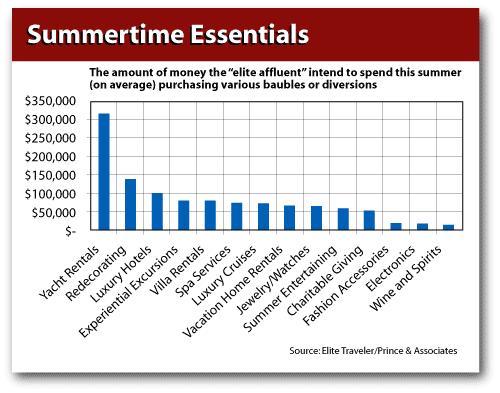
Here's a chart to help you understand what you're missing:

....from The Rude Awakening newsletter...
....from The Rude Awakening newsletter...
We Took Kristol's Word for It
And he was right. O'Connor resigned.
FreeRepublic folks seem to like Ted Olsen as the replacement, and (no surprise here) do NOT like Alberto Gonzales--he's a squish on RKBA, and other important issues.
The Test of Manhood is coming: will GWB appoint a "moderate" to match O'Connor's "moderation," or will he appoint a genuine (non-positivist) conservative?
FreeRepublic folks seem to like Ted Olsen as the replacement, and (no surprise here) do NOT like Alberto Gonzales--he's a squish on RKBA, and other important issues.
The Test of Manhood is coming: will GWB appoint a "moderate" to match O'Connor's "moderation," or will he appoint a genuine (non-positivist) conservative?
Rat Patrol: "Cruelty to Animals"
From France, where PETA must have a cousin:
Jacques Peyrat, the outspoken mayor of Nice, caused added offence to the SPA, the national society for the protection of animals, by congratulating himself on his work in the local paper.
He spotted the well-nourished rat during an official visit to a rubbish collection point in the city's old quarter close to the seafront.
He told Nice Matin that he grabbed a shovel and used it to "smash" the rat. "I cannot stand those animals," he explained.
Mr Peyrat's confession outraged the Alpes Maritimes section of the SPA, which lodged a criminal complaint with the prosecutors. If it leads to a court case, he could be fined up to £2,100.
The society accepted that "a huge rat-clearing operation" was necessary, but said the killing amounted to cruelty. The mayor's subsequent "boasting" was an incitement to others to act in similar fashion.
Serge Belais, national president of the SPA, said: "If it's accepted that people can mistreat rats today, then tomorrow it will be birds and cats."
An aide to Mr Peyrat, a former member of the National Front and now a senator for the UMP party, said: "We are not taking this seriously."
© Copyright of Telegraph Group Limited 2005.
http://news.telegraph.co.uk/news/main.jhtml?xml=/news/2005/07/01/wmay01.xml
Jacques Peyrat, the outspoken mayor of Nice, caused added offence to the SPA, the national society for the protection of animals, by congratulating himself on his work in the local paper.
He spotted the well-nourished rat during an official visit to a rubbish collection point in the city's old quarter close to the seafront.
He told Nice Matin that he grabbed a shovel and used it to "smash" the rat. "I cannot stand those animals," he explained.
Mr Peyrat's confession outraged the Alpes Maritimes section of the SPA, which lodged a criminal complaint with the prosecutors. If it leads to a court case, he could be fined up to £2,100.
The society accepted that "a huge rat-clearing operation" was necessary, but said the killing amounted to cruelty. The mayor's subsequent "boasting" was an incitement to others to act in similar fashion.
Serge Belais, national president of the SPA, said: "If it's accepted that people can mistreat rats today, then tomorrow it will be birds and cats."
An aide to Mr Peyrat, a former member of the National Front and now a senator for the UMP party, said: "We are not taking this seriously."
© Copyright of Telegraph Group Limited 2005.
http://news.telegraph.co.uk/news/main.jhtml?xml=/news/2005/07/01/wmay01.xml
Haley: Fun, but Myth
Now we are reminded that "true stories" are not necessarily so.
Jack Cashill advises (http://www.worldnetdaily.com/news/article.asp?ARTICLE_ID=45084) that Alex Haley's story about "Kunta Kinte" (and thus, the series "Roots" which is based on the story) is largely fiction.
Ah, well.
Jack Cashill advises (http://www.worldnetdaily.com/news/article.asp?ARTICLE_ID=45084) that Alex Haley's story about "Kunta Kinte" (and thus, the series "Roots" which is based on the story) is largely fiction.
Ah, well.
Thursday, June 30, 2005
Buckley on Iraq
Snipped from a Bill Buckley column:
Last week a conservative dissenter submitted an analysis to his colleagues. Several points were made.
After the success of the military enterprise, "two goals then took form. The first was to organize elections, giving Iraqis' tribal divisions an opportunity, acting together, to record their willingness to establish a self-governing republic. Once again, the results were gratifying. Some 80 percent of those who voted registered their endorsement of a constitutional regime change.
"The second goal has been to bring such order to Iraq as is required to effect the self-government the voters had endorsed. This objective has failed."
The failure, it is argued, cannot be redeemed by prospects that remain illusory. There isn't freedom of civil action in Iraq. There are areas in which order is routinely exercised, but there are no areas where Iraqis can assume safety from insurgent disruption.
In the past 12 months, our policies have been expediential: an attempt to effect such order as is required to permit a devolution of authority to Iraqis. The planted axiom has been that it is only a matter of time before the two great passions -- for stability and for political self-government -- converge into a new and viable Iraq.
That's not to be taken for granted. "No developments in the first half year of 2005 warrant confidence that these goals are being met, or even that they are predictable. The blame for this cannot responsibly be assigned to any one delinquent body. The United States military has performed with courage and perseverance. The Iraqis have never submitted to the insurgents, by whom they are nevertheless frequently overcome."
The critic persuasively argues that no commitment by the United States can be interpreted as extending beyond a reasonable allocation of the nation's resources.
Buckley's concluding graph:
A respect for the power of the United States is engendered by our success in engagements in which we take part. A point is reached when tenacity conveys not steadfastness of purpose but misapplication of pride. It can't reasonably be disputed that if in the year ahead the situation in Iraq continues about as it has done in the past year, we will have suffered more than another 500 soldiers killed. Where there had been skepticism about our venture, there will then be contempt.
Last week a conservative dissenter submitted an analysis to his colleagues. Several points were made.
After the success of the military enterprise, "two goals then took form. The first was to organize elections, giving Iraqis' tribal divisions an opportunity, acting together, to record their willingness to establish a self-governing republic. Once again, the results were gratifying. Some 80 percent of those who voted registered their endorsement of a constitutional regime change.
"The second goal has been to bring such order to Iraq as is required to effect the self-government the voters had endorsed. This objective has failed."
The failure, it is argued, cannot be redeemed by prospects that remain illusory. There isn't freedom of civil action in Iraq. There are areas in which order is routinely exercised, but there are no areas where Iraqis can assume safety from insurgent disruption.
In the past 12 months, our policies have been expediential: an attempt to effect such order as is required to permit a devolution of authority to Iraqis. The planted axiom has been that it is only a matter of time before the two great passions -- for stability and for political self-government -- converge into a new and viable Iraq.
That's not to be taken for granted. "No developments in the first half year of 2005 warrant confidence that these goals are being met, or even that they are predictable. The blame for this cannot responsibly be assigned to any one delinquent body. The United States military has performed with courage and perseverance. The Iraqis have never submitted to the insurgents, by whom they are nevertheless frequently overcome."
The critic persuasively argues that no commitment by the United States can be interpreted as extending beyond a reasonable allocation of the nation's resources.
Buckley's concluding graph:
A respect for the power of the United States is engendered by our success in engagements in which we take part. A point is reached when tenacity conveys not steadfastness of purpose but misapplication of pride. It can't reasonably be disputed that if in the year ahead the situation in Iraq continues about as it has done in the past year, we will have suffered more than another 500 soldiers killed. Where there had been skepticism about our venture, there will then be contempt.
Tuesday, June 28, 2005
Janet Reno Contradicting Janet Reno
Janet Reno says in Florida that "I have trouble with a war that has no endgame and I have trouble with a war that generates so many concerns about individual liberties." Notice she doesn't say that the war has violated individual liberties, or that she believes that, but merely that there are "so many concerns" about it. Uh-huh, Jan--like Elian Gonzales?
The Richmond Times-Dispatch also reports that "the former U.S. attorney general said she thinks the government would be hard-pressed to find a legal basis to prosecute many of the Taliban and al-Qaida prisoners being detained at Guantanamo Bay." We all know Jan (Flamethrower) Reno's solution for this little problem...
---James Taranto---
http://www.opinionjournal.com/best/?id=110006878
The Richmond Times-Dispatch also reports that "the former U.S. attorney general said she thinks the government would be hard-pressed to find a legal basis to prosecute many of the Taliban and al-Qaida prisoners being detained at Guantanamo Bay." We all know Jan (Flamethrower) Reno's solution for this little problem...
---James Taranto---
http://www.opinionjournal.com/best/?id=110006878
Seminary Education SHOULD Include...
Via Bettnet (see blogroll):
Saint Thomas, moreover, asserts the truth that it is often from our outward movements that other men form their judgment about us. Thomas encourages us to study our outward movements so that if they are inordinate in any way, they may be corrected. Such things need to be addressed in formation because they have a definite effect on our ability to be and bring Christ to others. Does the seminary deal with a seminarian that sways when he walks, who has limp wrists, who acts like a drama queen or who lisps? It must. This not about a witch hunt but being honest enough to admit that such external behavior affects our ability to share Christ. I knew a seminarian that spoke in a very effeminate manner, and to his credit he recognized this impediment to his future preaching the Gospel, and on his own sought help from a speech instructor. The seminary did not see this glaring problem and did not move this man to get assistance. That is the problem.
When we are at the altar or preaching the Gospel, we are Jesus Christ and must do our best to image him to our people. Anything we do that takes people's attention away from this reality must be addressed. Over dramatic movements, purposeful lisps, swaying, in short, effeminate behavior removes attention from Christ and His word and puts it on the priest. This is not just distracting to other men but I know my sisters will roll their eyes when the Liberace-like priest celebrates himself while celebrating the Mass. (Fr. James Mason, Dir/Vocations, Sioux Falls)
http://www.fathertodd.com/blog/
The whole article should be read. It's not long.
Saint Thomas, moreover, asserts the truth that it is often from our outward movements that other men form their judgment about us. Thomas encourages us to study our outward movements so that if they are inordinate in any way, they may be corrected. Such things need to be addressed in formation because they have a definite effect on our ability to be and bring Christ to others. Does the seminary deal with a seminarian that sways when he walks, who has limp wrists, who acts like a drama queen or who lisps? It must. This not about a witch hunt but being honest enough to admit that such external behavior affects our ability to share Christ. I knew a seminarian that spoke in a very effeminate manner, and to his credit he recognized this impediment to his future preaching the Gospel, and on his own sought help from a speech instructor. The seminary did not see this glaring problem and did not move this man to get assistance. That is the problem.
When we are at the altar or preaching the Gospel, we are Jesus Christ and must do our best to image him to our people. Anything we do that takes people's attention away from this reality must be addressed. Over dramatic movements, purposeful lisps, swaying, in short, effeminate behavior removes attention from Christ and His word and puts it on the priest. This is not just distracting to other men but I know my sisters will roll their eyes when the Liberace-like priest celebrates himself while celebrating the Mass. (Fr. James Mason, Dir/Vocations, Sioux Falls)
http://www.fathertodd.com/blog/
The whole article should be read. It's not long.
Benedict XVI on Liturgical Music
An excellent essay which covers the 'high points.' Originally published in Homiletic and Pastoral Review, 2000, it is required reading for Catholic church musicians.
Cardinal Ratzinger On Liturgical Music
In an article entitled "Liturgie und Kirchenmusik" published in 1986 in Communio, Cardinal Ratzinger referred to the incompatibility between rock music and the liturgy of the Church. A storm of progressive protest ensued, most of it aimed at the messenger instead of arguing to the contrary. How can a theologian judge modern music? What right does a Curia official have to say how today's young people should participate in the Liturgy? Implicit in the controversy was the hackneyed caricature of Ratzinger as the Teutonic-academician-turned-doctrinal-watchdog.
A revisionist view became necessary in 1996 with the publication of another book-length interview with the Cardinal (this time by German journalist Peter Seewald), because the second Ratzinger Report began with eighty pages of biographical information. His Eminence, we learn, is only human after all. Reminiscing about his childhood in Bavaria, Cardinal Ratzinger admits that music (especially Mozart) had a major role in his family life. "Music, after all, has the power to bring people together . . . Yes, art is elemental. Reason alone as it's expressed in the sciences can't be man's complete answer to reality, and it can't express everything that man can, wants to, and has to express. I think God built this into man."1
Being an intellectual does not disqualify one from commenting upon either music or liturgy, provided one recognizes the limits of rational discourse. As Cardinal Ratzinger himself put it, theologians "cannot enter into musical discussions per se, but they can nonetheless ask where the seams are, so to speak, that link faith and art."2
What follows is a summary of three articles by Cardinal Ratzinger on liturgical music which appeared in German journals during the years 1986-1994 and were reprinted in English as part of the anthology, A New Song for the Lord: Faith in Christ and Liturgy Today.3
The essays were written for different occasions, but they follow the same pattern: the author contrasts a problematic theory or a pernicious trend with the true theology of the liturgy, and from that draws conclusions as to the proper place of music in the liturgy and suggests guidelines for practical applications.
A) The Cultural Challenge Vs. The Biblical Culture Of Faith
("' Sing Artistically for God': Biblical Directives for Church Music," pp. 94-110.)
"Since church music is faith that has become a form of culture, it necessarily shares in the current problematic nature of the relationship between Church and culture" (94). This relationship was in crisis during the Renaissance and the Reformation, but as of the Enlightenment, secular culture "emancipated" itself from the faith: they went their separate ways and have drifted further apart ever since.
Since the seventeenth century the Church has seen the Caecilian reform of sacred music, the rediscovery of Gregorian chant, and the renewal of polyphonic church music. Nevertheless, as a result of cultural dislocations, "we are at a loss as to how faith can and should express itself culturally in the present age" (95).
The picture from the culture's side is bleak. In the absence of religion, art becomes groundless aestheticism with neither direction nor purpose. Music in particular has split into two worlds: pop (a manufactured commodity) and rationally constructed high-brow music (an elite, degenerate form of "classical" music).
A middle ground remains: "a staying at home in the familiar music that preceded such divisions, touched the person as a whole and is still capable of doing this even today . . . Church music mostly settles in this middle ground" (95).
Many are the calls for the Church to dialogue with culture today, but few imagine the talks as being bilateral. You can't expect the Church to subject herself to modern culture, which, having lost its religious base, is in a never-ending process of self-doubt. Culture, too, must question itself radically and be opened to a cure, a reconciliation with religion.
Are there any biblical directives for the path that church music should take? Cardinal Ratzinger narrows the question: "Can we find one biblical text that sums up the way Holy Scripture sees the connection between music and faith" (96)?
The Bible contains its own hymnal: "the Psalter, born from the practice of singing and playing musical instruments during worship." Furthermore this practical tradition contains "essential elements of a theory of music in faith and for faith." Within the Old Testament, the Psalter is like a bridge between the Law and the Prophets; it also serves as a bridge connecting the two Testaments. From the earliest days of the Church, the psalms are prayed and sung as hymns to Christ, the Son of David the psalmist. "Christ himself thus becomes the choir director who teaches us the new song and gives the Church the tone and the way in which she can praise God appropriately and blend into the heavenly liturgy" (97).
Cardinal Ratzinger selects one psalm verse which appears throughout the history of theological reflection on church music. Psalm 47:7 (in some numberings Psalm 46 and/or the eighth verse) exhorts us to "Sing praises with a psalm" (RSV). The Hebrew word maskil is variously rendered in modern translations as "an inspired song" (M. Buber, German) or as playing "with all your skill" (Jerusalem Bible, French), or as singing "artfully" (in a version approved by the Italian Bishops Conference).
The ancient translations of the Church also shed light on the subject. "The Septuagint, which became the Old Testament of Christianity, wrote psalate synetos, which we might translate as: ' . . . Sing with understanding' — in both senses of the word: that you yourselves understand it and that it is understandable" (97).
Of course this involves more than a merely rational act; we are to sing "in a way worthy of and appropriate to the spirit, disciplined and pure" (98). St. Jerome's rendering is along the same lines: psallite sapienter. Sapientia means more than understanding; "[it] also denotes an integration of the entire human person . . . with all the dimensions of his or her existence." Just as the gift of wisdom integrates knowledge and experience with the requirements of Divine Law, so the singing of the inspired psalms involves the human person, body and soul, with all its faculties, in divine worship.
The first word of the verse, "Sing praises with a psalm," in Hebrew zamir, is also laden with history. "The emphasis is on articulated singing, a singing with reference to a text, which is instrumentally supported, as a rule" (98-99). In stark contrast to the orgiastic cult music of the pagans, zamir refers to "logos-like" music, "which incorporates a word or wordlike event it has received and responds to it in praise or petitions, in thanksgiving or lament." The Septuagint Bible chose psallein as its translation, giving a new, culturally conditioned meaning to a Greek word that previously had meant only to play a stringed instrument, but never to sing.
From this word study, Cardinal Ratzinger draws several conclusions about possible biblical directives for music in the Church.
The command, "Sing to the Lord," runs through all of Scripture as part of the call to worship and glorify God. "This means that musical expression is part of the proper human response to God's self-revelation . . . Mere speech, mere silence, mere action are not enough" (100).
There is no such thing as a faith completely undetermined by culture, which could then be inculturated any way you like. "The faith decision as such entails a cultural decision; . . . Faith itself creates culture and does not just carry it along like a piece of clothing . . . This cultural given . . . is capable of encountering other contemporary cultures . . . This ability to exchange and flourish also finds its expression in the ever-recurring imperative, 'Sing to the Lord a new song.'" The Christological interpretation of the psalms is a particularly dramatic example of this capacity for development in what is an irrevocable and fundamental cultural form (101).
The various meanings to be found in the second word of our psalm verse range between the two translations sapienter and cum arte. Singing in accordance with wisdom implies a word-oriented art, which is not concerned merely with intelligibility but "stands under the primacy of logos" and makes demands upon our highest moral and spiritual powers. The second translation, artfully, tells us that encountering God challenges a person to respond to the best of his or her abilities. God gave Moses detailed specifications for the tabernacle; artistic endeavor in the book of Exodus is portrayed as a participation in God's creativity (103).
The New Testament, by both frequent citation and explicit command, takes up the psalm tradition as an integral part of its own teaching and worship. "When you come together, each one has a hymn [Gk: psalmon], a lesson, a revelation, a tongue, or an interpretation. Let all things be done for edification" (1 Cor. 14:26). To the early Church the psalm appeared as a gift of the Spirit. The epistles also give evidence of exalted Christological hymns newly composed in Greek. By the second century, however, as a precaution after the musical innovations of the Gnostic sect, the Church reduced liturgical music to the Psalter. "The theology of the Psalter sufficed and set the standard in terms of content, but also . . . the way of making music specified by the Psalter became the musical model of emerging Christendom" (104). To put it in a less scholarly way, revelation was complete with the end of the apostolic age, and the divinely inspired hymns found in Sacred Scripture were sufficient for the Church's worship.
In light of the foregoing discussion, both "pop" music and the music of elitist aesthetes are unsuitable for divine worship. The latter, proclaiming art to be "for art's sake" and for no other purpose, elevates the composer to the level of a "pure creator." "According to Christian faith, however, it belongs to the essence of human beings that they come from God's 'art' . . . and as perceivers can think and view God's creative ideas with him and translate them into the visible and the audible" (106).
On the other hand, hasn't the Church's liturgical music always drawn on popular music to renew itself? Isn't "pop" music just what the Church needs in order to "relate" with contemporary culture? Cardinal Ratzinger recommends "treading carefully" in this area (107-108). In the past folk music was the expression of a clearly defined community held together by language, history and a way of life. Springing from fundamental human experience, it conveyed a truth, however naive the form may have been. Pop music, in contrast, is a standardized product of mass society, a function of supply and demand. The 20th-century composer Paul Hindemith called the constant presence of such noise "brainwashing," and C. M. Johansson claims that hearing it gradually makes us incapable of listening attentively: "we become musically comatose . . . This medium kills the message" (p. 108 cf. footnote 19).
Cardinal Ratzinger insists that the faith must not be trivialized in the name of inculturating it. Today we do not have to limit church music so strictly to chanting of the psalms, because we have "an infinitely larger trove" of good liturgical music to draw on. But to hold the line against the onslaught of misguided attempts to import "modern" musical forms into the liturgy requires "the courage of asceticism, the courage to contradict. Only from such courage can new creativity arise" (109).
B) The Sociological Challenge Vs. True Christian Anthropology
("The Image of the World and of Human Beings in the Liturgy and Its Expression in Church Music" pp. 111-127.)
"Conversation with God transcends the boundaries of human speech" (111); therefore it calls on music, both vocal and instrumental, for help.
After the Second Vatican Council there were disputes over the right form of music in worship. The initial clashes were between pastoral expediency ("We worship in the vernacular now . . .") and musicians who maintained that their traditional repertoire had intrinsic and pastoral value. The question underlying such differences of opinion then was: how do we apply liturgical directives? More recently, a second wave of controversy has been "pushing the questions forward, as far as the foundations themselves." The issue has become: what is liturgical action in the first place, what are its anthropological and theological foundations?
Symptomatic of the new thinking is the Nuovo Dizionario di Liturgica (1984), article on canto e musica. It declares the starting point of liturgy to be the gathering of two or three in the name of Christ (Matt. 18:20). This sounds harmless enough, but it gains revolutionary momentum when the verse is isolated and pitted against the entire liturgical tradition. Such a definition places the group before the Church and brings "autonomous" individuals into conflict with an "authoritarian" institution. "It is evident that with the adoption of sociological language the prior adoption of its evaluations has also occurred" (113). New music good; old music bad! Gregorian chant and Palestrina are seen as "tutelary gods" for those in power who, threatened by cultural change, cling to an ancient repertoire.
Cardinal Ratzinger turns the hermeneutic of suspicion back on the liturgical theorists. "There is of course not only an idolization of sociology at work here but also a complete separation of the New Testament from the history of the Church" (114). The notion, that the Church has been in decline since Jesus began it, is a familiar Enlightenment myth, which ultimately becomes an excuse for cut-and-paste editions of the Bible (like Jefferson's) or the Marxist texts of the Missa Nicaraguensis sung in the 1980s.
What are the new and better ideas of the liturgical experts? They insist on two basic values: "The 'primary value' of a renewed liturgy is, we are told, 'the full and authentic action of all persons.'" The people of God proclaims its identity in song. The second value judgment follows: music is the power that brings about cohesiveness within the group. Celebration, ergo, becomes creativity; the "how" becomes more important than the "what."
Condensed in this way, the argument reads like a lampoon. Yet Ratzinger's full analysis of the effects of modern "scientific" sociology upon liturgical music is trenchant. "I would not be speaking of all this in so much detail if I thought that such ideas were attributable to only a few theoreticians" (115). It is all too common that "so-called creativity, the active participation of all present, and the relationship to a group in which everyone is acquainted with and speaks to everyone else" are mistaken for the real categories of the conciliar understanding of liturgy.
The philosophical basis of this sociological "take" on liturgy is the view that power opposes freedom. This assigns, a priori, a negative quality to the concept of "institution" and reduces the object of hope from Paschal redemption to social progress. Herein lies the "tragic paradox" of this trend in liturgical reform: the institutional Church is seen as a hindrance to "freedom," yet liturgy without the Church is a self-contradiction. "Here it has been forgotten that the liturgy should be the opus Dei in which God himself first acts and we become redeemed people precisely through his action. [If] the group celebrates itself . . . it is celebrating nothing at all since it is no cause for celebration" (117).
In actuality, the Church is the communio sanctorum of all places and all times (118). Romano Guardini has elaborated upon the momentous consequences of realizing that the communion of saints (and not the Base Community) is the true subject of the liturgy. The Church's liturgy has an objective and positive character, because it lives in three ontological dimensions: cosmos, history and mystery. Liturgy has a cosmic dimension because as believers we do not create it, but participate in something greater that transcends us all. As a result of its historic dimension, it develops as a living thing while maintaining its identity (cf. the discussion of biblical culture, above). Finally, liturgy's dimension of mystery means that we do not initiate the liturgical event; rather, it originates in a call and a divine act of love, to which our response is obedience.
This vantage point is of great importance for the artistic questions involved in preparing liturgical music. The music of emancipation is inconsistent with true liturgy. Furthermore, "creativity" that ignores the creaturely status of man "is by its very nature absurd and untrue since humans can only be themselves through receptivity and participation." The real human condition is that we stand in need of a redemption which human effort cannot bring about.
Our faith is Logocentric, and so must our worship be (Cf. logike latreia Rom. 12:1). "The ' Word' to which Christian worship refers is first of all not a text, but a living reality: a God . . . who communicates himself by becoming a human being. This incarnation is the sacred tent, the focal point of all worship which looks at the glory of God and gives him honor" (121).
"Liturgical music is a result of the claim and the dynamics of the Word's incarnation . . . Faith becoming music is a part of the process of the Word becoming flesh" (122). At the same time (one might say: in counterpoint), the flesh becomes "logocized" or spiritualized, restoring harmony to postlapsarian creation. "Wood and brass turn into tone; the unconscious and the unsolved become ordered and meaningful sound."
Our Incarnate Lord, who was raised up on the cross, raised up our fallen human nature. Western music, from Gregorian chant through Renaissance polyphony to Bruckner and beyond, lives from this great synthesis "of spirit, intuition and sensuous sound . . . [T]he liturgical music of the Church must be subject to that integration of the human state which appears before us in incarnational faith" (124).
Practically speaking, the prerequisites for sacred music include "awe, receptivity and a humility that is prepared to serve by participating in the greatness which has already gone before" (125). Furthermore, the Church has posted road signs: the great liturgical texts (Kyrie, Gloria, Credo, Sanctus, Agnus Dei) and the references in her official documents to Gregorian chant and Palestrina as models providing orientation.
C) The "Postconciliar" Challenge Vs. The Cosmic Liturgy
("'In the Presence of the Angels I Will Sing Your Praise'; The Regensburg Tradition and the Reform of the Liturgy," pp. 128-146.)
The point of departure of this essay is a description of the medieval frescoes in the crypt of the monastery of Marienberg in South Tyrol. "The real focal point is the Majestas Domini, the risen Lord lifted up on high, who is seen at the same time and above all as the one returning, the one already coming in the Eucharist . . . Liturgy is anticipated Parousia . . . " (129).
Indeed, St. Benedict, in his Rule, reminds his monks of Psalm 138:1: "In the presence of the angels I will sing to you," and admonishes them, "Let us reflect on how we should be in the presence of God and the angels, and when we sing let us stand in such a way that our hearts are in tune with our voices." Cardinal Ratzinger goes on to explain, "The liturgy is not a thing the monks create. It is already there before them. It is entering into the liturgy of the heavens that has always been taking place." This is the clear meaning of the frescoes.
Sadly, this "already, but not yet" character of the earthly liturgy has been obscured lately by a preoccupation with a liturgical reform that is "already" with us but has "not yet" overcome the old Tridentine order. According to this strange perspective, "a chasm separates the history of the Church into two irreconcilable worlds: the preconciliar and the postconciliar" (130).
Cardinal Ratzinger's brother served as choirmaster in the Regensburg cathedral from 1964 to 1994. When he began, the Constitution on the Sacred Liturgy of Vatican II had not yet been implemented. The music at Regensburg Cathedral realized in an exemplary way the artistic standards expressed in the motu proprio of Pius X, "Tra le sollecitudini" of November 22, 1903. As bishop of Mantua and patriarch of Venice, Pius X had opposed the operatic style of church music prevalent in Italy. "Insisting on chant as the truly liturgical music was for him part of a larger reform program that was concerned with restoring to worship its purity and dignity and shaping it according to its own inner claim" (131).
Another historical note helps to narrow the chasm between pre- and post-conciliar. Sacrosanctum Concilium, in laying the foundations for reform, constructed a large framework permitting a variety of actualizations. "The reform itself was then shaped by a postconciliar commission and cannot in its concrete details simply be credited to the Council." The history of liturgy is always marked by the tension between continuity and renewal; in the twentieth century the real tension has not been between tired tradition and radical reform, but rather between two stages of reform.
The Cardinal warns that "the dualistic historical view of a pre- and postconciliar world" leads to notions that call the very essence of liturgy into question. One example of this exaggerated "either-or" is the idea that the priest alone was the celebrant of the liturgy before the Council, but now it is the assembled congregation. This implies that the congregation determines what happens in the liturgy. But the priest never had the right to decide arbitrarily what was to be done in the liturgy. It was a "rite," that is, an objective form of the Church's corporate prayer (132).
The new Catechism, on the other hand, sums up the best insights of the Liturgical Movement. Liturgy means "service in the name of/on behalf of the people." But "the People of God is not simply there, as the Germans, French, Italians, or other peoples are; it comes into being again and again only through the service of the Son and by his lifting us into the community of God which we cannot enter on our own . . . Every liturgical celebration is an action of Christ the priest and his Body which is the Church (p. 134; cf. CCC 1069-1070)."
Cardinal Ratzinger does not mince words. "Liturgy presupposes . . . that the heavens have been opened . . . If the heavens are not open, then whatever liturgy was is reduced to role playing and, in the end, to a trivial pursuit of congregational self-fulfillment in which nothing really happens. The decisive factor, therefore, is the primacy of Christology" (133).
We must resolutely defend ourselves against "postconciliar" efforts to assign an absolute value to the "community." In the liturgy, the priest acts in persona Christi. The Catechism discusses the role of the congregation also, significantly in the chapter on the Holy Spirit: "The liturgical assembly derives its unity from the 'communion of the Holy Spirit' who gathers the children of God into the one Body of Christ.' This assembly transcends racial, cultural, social — indeed, all human affinities. The assembly should prepare itself to encounter its Lord and to become 'a people well-disposed'" (CCC 1097, 1098).
What significance does this Catholic understanding of liturgy have for church music? The Council's reform was aimed at counteracting modern individualism and the moralism connected with it, so that the dimension of mystery in liturgy could reappear, its cosmic character which embraces heaven and earth (p. 135; cf. SC 8). For Christians, the Logos orients our worship towards the historical origin of faith, preserved for us in Scripture and Tradition. Church music should not be a performance on the occasion of worship, but is to be liturgy itself, "a harmonizing with the choir of the angels and saints." Gregorian chant and classic polyphonic music are ordered to the mystery in liturgy and to its Logos-character, as well as to its bond to the historical world. They furnish us with a norm which does not exclude new musical forms, but which guides us more surely toward what lies on the horizon.
Attention to the essence of liturgy clarifies the question concerning the place of music in liturgy. You might say, "As liturgy goes, so goes musica sacra." Philipp Harnoncourt has put it this way: "Jews and Christians agree with one another that their singing and music-making point to heaven, or rather that these come from heaven or are learned from heaven" (137). Cardinal Ratzinger elaborates: "Faith comes from listening to God's word. But wherever God's word is translated into human words there remains a surplus of the unspoken and unspeakable which calls us to silence — into a silence that in the end lets the unspeakable become song and also calls on the voices of the cosmos for help so that the unspoken may become audible."
Because church music comes from the Word — both as expression of the Truth and response to a call — its character must correspond to the words in which the Logos has expressed himself. Hence not all music is appropriate for liturgical use: "By its nature such music must be different from music that is supposed to lead to rhythmic ecstasy, stupefying anesthetization, sensual excitement, or the dissolution of the ego in Nirvana, to name just a few possibilities" (138). St. Cyprian's treatise on the Lord's Prayer offers a useful guideline: "Discipline, which includes tranquility and awe, belongs to the words and posture of praying."4 It should also belong to sacred song.
Cardinal Ratzinger quickly dismisses two other specious demands of the "new" liturgists. Some, mistaking external busyness for "active participation," would veto the use of the choir as intruding between the congregation and the liturgical action. But the choir is part of the community and its singing legitimately represents the prayer assembly. The concept of representation, of standing in for another, affects all levels of religious reality, including worship, and is a fundamental category of the Christian faith.
Another commonly heard "postconciliar" objection is a "fanaticism about vernacular," even to the point of forbidding chant and hymns in Latin. The Cardinal wryly observes that, in a multicultural society, such an insistence on the vernacular has about as much logic to it as the demand for a hand-shaking, on-speaking-terms community does in an age of increased mobility. Harnoncourt notes that "The traditional, so-called 'Latin Mass' always had Aramaic (Amen, Alleluia, Hosanna, Maran atha) and Greek (Kyrie, Trisagion) parts, and the sermon was usually given in the vernacular. Real life is not acquainted with stylistic unity and perfection; on the contrary, where something is really alive, formal and stylistic variety will occur . . ., and the unity is an organic one" (140).
In concluding his talk, Cardinal Ratzinger commends the departing cathedral choirmaster for striving "to manage continuity in development and development in continuity" during the theological and liturgical upheavals since the Council, "so that the liturgy in the Regensburg cathedral kept its dignity and excellence and remained transparent to the cosmic liturgy of the Logos in the unity of the whole Church without taking on a museum-like character" (140). He also expresses the hope that true reform will "flourish in the spirit of the Second Vatican Council — reform that is not discontinuity and destruction but purification and growth to a new maturation and a new fullness" (146).
In each of the articles just summarized, Cardinal Ratzinger responds to a specialized, academic-sounding challenge to the traditional Catholic understanding of the liturgy by considering the issue from a wider, ultimately theological perspective. To multiculturalist demands he replies with a reminder that Catholic faith and worship are rooted in a historical religion and thus are part and parcel of a specific cultural tradition. When the sociological gauntlet is thrown down, he arms himself with the insights of a comprehensive Christian anthropology. The notion that Vatican II divides Church history into a reactionary past and a glorious future is gently corrected with evidence that the reform of the liturgy has been the ongoing work of a century and more.
This technique of "taking the broader perspective" is evident in the very arrangement of essays in the anthology, A New Song for the Lord. The articles on liturgical music are grouped with one on church architecture at the end of Part II, preceded by an essay on "The Resurrection as the Foundation of the Christian Liturgy" (explaining Sunday as a Little Easter and the new Sabbath). Part I of the book, "Jesus Christ, Center of Faith and Foundation of Our Hope," treats more fundamental questions of Christology, catechesis and the true understanding of power in the Church. The essays are cogently argued and can be read independently, yet taken together they offer an almost systematic, theological treatise on the liturgy.
We have grown accustomed to hearing famous professors weigh in with expert commentary, each presenting his own abstruse "take" on a given issue. Not so when Cardinal Ratzinger writes about the liturgy or sacred music. The themes and arguments in his essays on liturgical music recur throughout his works, because he is writing about the lifeblood of the Mystical Body and the atmosphere that baptized souls breathe in their life of grace.
A few random examples illustrate this consistency. In Co-Workers of the Truth, a selection from Cardinal Ratzinger's writings arranged as meditations for each day of the year, there are (besides excerpts from the articles summarized above) two other readings concerning sacred music:
"The first Christmas carol of history . . . had no human origins — Saint Luke records it as the song of the angels who were the evangelists of the holy night: Glory to God in the highest, and peace on earth among men, those with whom he is pleased, those of good will. This song sets a standard . . . Peace among men results from God's glory. Those who are concerned about the human race and its well-being have to be concerned about God's glory first of all . . ., [which] is not some private concern . . . [but] a public affair."
"Three great symbols dominate the liturgy of this night of the Resurrection: light [the Paschal candle], water and 'the new song,' that is, the Alleluia . . . Granted, we shall not sing this new song in its fullness until we are in the 'new world,' until God calls us by a 'new name' (Rev. 2:17), until everything has been made new. But we are permitted to anticipate something of this [beatific] newness in the great joy of the Easter vigil."5
When arguing about the liturgy, one runs the risk of abstracting, of prescinding from the mystery. Cardinal Ratzinger's well-reasoned essays on sacred music bring to mind vividly the fact that the liturgy is, after all, divine.
Notes
1. Joseph Cardinal Ratzinger, Salt of the Earth: The Church at the End of the Millennium (an interview with Peter Seewald, translated by Adrian Walker), Ignatius, San Francisco, 1997, p. 47.
2. Joseph Cardinal Ratzinger, A New Song for the Lord: Faith in Christ and Liturgy Today (translated by Martha M. Matesich), The Crossroad Publishing Company, New York, 1997, p. 96.
3. The Crossroad Publishing Company, 370 Lexington Avenue, New York, NY 10017. In this summary, the actual title of each article is given after a descriptive heading in bold. Page numbers for citations are included in the text.
4. St. Cyprian, De oratione dominica, 4.
5. Joseph Cardinal Ratzinger, Co-Workers of the Truth: Meditations for Every Day of the Year (edited by Sr. Irene Grassl, translated by Sr. Mary Frances McCarthy, S.N.D. and Rev. Lothar Krauth), Ignatius, San Francisco, 1992. The readings cited are for December 29 (pp. 408-409) and April 14 (pp. 123-124).
Mr. Michael J. Miller is a translator for Ignatius Press and a free-lance writer. His articles have been published in Faith and Reason, Catholic World Report and the Month. His last article in HPR appeared in March 1999.
© Ignatius Press 2000.
http://www.catholicculture.org/docs/doc_view.cfm?recnum=4041
Cardinal Ratzinger On Liturgical Music
In an article entitled "Liturgie und Kirchenmusik" published in 1986 in Communio, Cardinal Ratzinger referred to the incompatibility between rock music and the liturgy of the Church. A storm of progressive protest ensued, most of it aimed at the messenger instead of arguing to the contrary. How can a theologian judge modern music? What right does a Curia official have to say how today's young people should participate in the Liturgy? Implicit in the controversy was the hackneyed caricature of Ratzinger as the Teutonic-academician-turned-doctrinal-watchdog.
A revisionist view became necessary in 1996 with the publication of another book-length interview with the Cardinal (this time by German journalist Peter Seewald), because the second Ratzinger Report began with eighty pages of biographical information. His Eminence, we learn, is only human after all. Reminiscing about his childhood in Bavaria, Cardinal Ratzinger admits that music (especially Mozart) had a major role in his family life. "Music, after all, has the power to bring people together . . . Yes, art is elemental. Reason alone as it's expressed in the sciences can't be man's complete answer to reality, and it can't express everything that man can, wants to, and has to express. I think God built this into man."1
Being an intellectual does not disqualify one from commenting upon either music or liturgy, provided one recognizes the limits of rational discourse. As Cardinal Ratzinger himself put it, theologians "cannot enter into musical discussions per se, but they can nonetheless ask where the seams are, so to speak, that link faith and art."2
What follows is a summary of three articles by Cardinal Ratzinger on liturgical music which appeared in German journals during the years 1986-1994 and were reprinted in English as part of the anthology, A New Song for the Lord: Faith in Christ and Liturgy Today.3
The essays were written for different occasions, but they follow the same pattern: the author contrasts a problematic theory or a pernicious trend with the true theology of the liturgy, and from that draws conclusions as to the proper place of music in the liturgy and suggests guidelines for practical applications.
A) The Cultural Challenge Vs. The Biblical Culture Of Faith
("' Sing Artistically for God': Biblical Directives for Church Music," pp. 94-110.)
"Since church music is faith that has become a form of culture, it necessarily shares in the current problematic nature of the relationship between Church and culture" (94). This relationship was in crisis during the Renaissance and the Reformation, but as of the Enlightenment, secular culture "emancipated" itself from the faith: they went their separate ways and have drifted further apart ever since.
Since the seventeenth century the Church has seen the Caecilian reform of sacred music, the rediscovery of Gregorian chant, and the renewal of polyphonic church music. Nevertheless, as a result of cultural dislocations, "we are at a loss as to how faith can and should express itself culturally in the present age" (95).
The picture from the culture's side is bleak. In the absence of religion, art becomes groundless aestheticism with neither direction nor purpose. Music in particular has split into two worlds: pop (a manufactured commodity) and rationally constructed high-brow music (an elite, degenerate form of "classical" music).
A middle ground remains: "a staying at home in the familiar music that preceded such divisions, touched the person as a whole and is still capable of doing this even today . . . Church music mostly settles in this middle ground" (95).
Many are the calls for the Church to dialogue with culture today, but few imagine the talks as being bilateral. You can't expect the Church to subject herself to modern culture, which, having lost its religious base, is in a never-ending process of self-doubt. Culture, too, must question itself radically and be opened to a cure, a reconciliation with religion.
Are there any biblical directives for the path that church music should take? Cardinal Ratzinger narrows the question: "Can we find one biblical text that sums up the way Holy Scripture sees the connection between music and faith" (96)?
The Bible contains its own hymnal: "the Psalter, born from the practice of singing and playing musical instruments during worship." Furthermore this practical tradition contains "essential elements of a theory of music in faith and for faith." Within the Old Testament, the Psalter is like a bridge between the Law and the Prophets; it also serves as a bridge connecting the two Testaments. From the earliest days of the Church, the psalms are prayed and sung as hymns to Christ, the Son of David the psalmist. "Christ himself thus becomes the choir director who teaches us the new song and gives the Church the tone and the way in which she can praise God appropriately and blend into the heavenly liturgy" (97).
Cardinal Ratzinger selects one psalm verse which appears throughout the history of theological reflection on church music. Psalm 47:7 (in some numberings Psalm 46 and/or the eighth verse) exhorts us to "Sing praises with a psalm" (RSV). The Hebrew word maskil is variously rendered in modern translations as "an inspired song" (M. Buber, German) or as playing "with all your skill" (Jerusalem Bible, French), or as singing "artfully" (in a version approved by the Italian Bishops Conference).
The ancient translations of the Church also shed light on the subject. "The Septuagint, which became the Old Testament of Christianity, wrote psalate synetos, which we might translate as: ' . . . Sing with understanding' — in both senses of the word: that you yourselves understand it and that it is understandable" (97).
Of course this involves more than a merely rational act; we are to sing "in a way worthy of and appropriate to the spirit, disciplined and pure" (98). St. Jerome's rendering is along the same lines: psallite sapienter. Sapientia means more than understanding; "[it] also denotes an integration of the entire human person . . . with all the dimensions of his or her existence." Just as the gift of wisdom integrates knowledge and experience with the requirements of Divine Law, so the singing of the inspired psalms involves the human person, body and soul, with all its faculties, in divine worship.
The first word of the verse, "Sing praises with a psalm," in Hebrew zamir, is also laden with history. "The emphasis is on articulated singing, a singing with reference to a text, which is instrumentally supported, as a rule" (98-99). In stark contrast to the orgiastic cult music of the pagans, zamir refers to "logos-like" music, "which incorporates a word or wordlike event it has received and responds to it in praise or petitions, in thanksgiving or lament." The Septuagint Bible chose psallein as its translation, giving a new, culturally conditioned meaning to a Greek word that previously had meant only to play a stringed instrument, but never to sing.
From this word study, Cardinal Ratzinger draws several conclusions about possible biblical directives for music in the Church.
The command, "Sing to the Lord," runs through all of Scripture as part of the call to worship and glorify God. "This means that musical expression is part of the proper human response to God's self-revelation . . . Mere speech, mere silence, mere action are not enough" (100).
There is no such thing as a faith completely undetermined by culture, which could then be inculturated any way you like. "The faith decision as such entails a cultural decision; . . . Faith itself creates culture and does not just carry it along like a piece of clothing . . . This cultural given . . . is capable of encountering other contemporary cultures . . . This ability to exchange and flourish also finds its expression in the ever-recurring imperative, 'Sing to the Lord a new song.'" The Christological interpretation of the psalms is a particularly dramatic example of this capacity for development in what is an irrevocable and fundamental cultural form (101).
The various meanings to be found in the second word of our psalm verse range between the two translations sapienter and cum arte. Singing in accordance with wisdom implies a word-oriented art, which is not concerned merely with intelligibility but "stands under the primacy of logos" and makes demands upon our highest moral and spiritual powers. The second translation, artfully, tells us that encountering God challenges a person to respond to the best of his or her abilities. God gave Moses detailed specifications for the tabernacle; artistic endeavor in the book of Exodus is portrayed as a participation in God's creativity (103).
The New Testament, by both frequent citation and explicit command, takes up the psalm tradition as an integral part of its own teaching and worship. "When you come together, each one has a hymn [Gk: psalmon], a lesson, a revelation, a tongue, or an interpretation. Let all things be done for edification" (1 Cor. 14:26). To the early Church the psalm appeared as a gift of the Spirit. The epistles also give evidence of exalted Christological hymns newly composed in Greek. By the second century, however, as a precaution after the musical innovations of the Gnostic sect, the Church reduced liturgical music to the Psalter. "The theology of the Psalter sufficed and set the standard in terms of content, but also . . . the way of making music specified by the Psalter became the musical model of emerging Christendom" (104). To put it in a less scholarly way, revelation was complete with the end of the apostolic age, and the divinely inspired hymns found in Sacred Scripture were sufficient for the Church's worship.
In light of the foregoing discussion, both "pop" music and the music of elitist aesthetes are unsuitable for divine worship. The latter, proclaiming art to be "for art's sake" and for no other purpose, elevates the composer to the level of a "pure creator." "According to Christian faith, however, it belongs to the essence of human beings that they come from God's 'art' . . . and as perceivers can think and view God's creative ideas with him and translate them into the visible and the audible" (106).
On the other hand, hasn't the Church's liturgical music always drawn on popular music to renew itself? Isn't "pop" music just what the Church needs in order to "relate" with contemporary culture? Cardinal Ratzinger recommends "treading carefully" in this area (107-108). In the past folk music was the expression of a clearly defined community held together by language, history and a way of life. Springing from fundamental human experience, it conveyed a truth, however naive the form may have been. Pop music, in contrast, is a standardized product of mass society, a function of supply and demand. The 20th-century composer Paul Hindemith called the constant presence of such noise "brainwashing," and C. M. Johansson claims that hearing it gradually makes us incapable of listening attentively: "we become musically comatose . . . This medium kills the message" (p. 108 cf. footnote 19).
Cardinal Ratzinger insists that the faith must not be trivialized in the name of inculturating it. Today we do not have to limit church music so strictly to chanting of the psalms, because we have "an infinitely larger trove" of good liturgical music to draw on. But to hold the line against the onslaught of misguided attempts to import "modern" musical forms into the liturgy requires "the courage of asceticism, the courage to contradict. Only from such courage can new creativity arise" (109).
B) The Sociological Challenge Vs. True Christian Anthropology
("The Image of the World and of Human Beings in the Liturgy and Its Expression in Church Music" pp. 111-127.)
"Conversation with God transcends the boundaries of human speech" (111); therefore it calls on music, both vocal and instrumental, for help.
After the Second Vatican Council there were disputes over the right form of music in worship. The initial clashes were between pastoral expediency ("We worship in the vernacular now . . .") and musicians who maintained that their traditional repertoire had intrinsic and pastoral value. The question underlying such differences of opinion then was: how do we apply liturgical directives? More recently, a second wave of controversy has been "pushing the questions forward, as far as the foundations themselves." The issue has become: what is liturgical action in the first place, what are its anthropological and theological foundations?
Symptomatic of the new thinking is the Nuovo Dizionario di Liturgica (1984), article on canto e musica. It declares the starting point of liturgy to be the gathering of two or three in the name of Christ (Matt. 18:20). This sounds harmless enough, but it gains revolutionary momentum when the verse is isolated and pitted against the entire liturgical tradition. Such a definition places the group before the Church and brings "autonomous" individuals into conflict with an "authoritarian" institution. "It is evident that with the adoption of sociological language the prior adoption of its evaluations has also occurred" (113). New music good; old music bad! Gregorian chant and Palestrina are seen as "tutelary gods" for those in power who, threatened by cultural change, cling to an ancient repertoire.
Cardinal Ratzinger turns the hermeneutic of suspicion back on the liturgical theorists. "There is of course not only an idolization of sociology at work here but also a complete separation of the New Testament from the history of the Church" (114). The notion, that the Church has been in decline since Jesus began it, is a familiar Enlightenment myth, which ultimately becomes an excuse for cut-and-paste editions of the Bible (like Jefferson's) or the Marxist texts of the Missa Nicaraguensis sung in the 1980s.
What are the new and better ideas of the liturgical experts? They insist on two basic values: "The 'primary value' of a renewed liturgy is, we are told, 'the full and authentic action of all persons.'" The people of God proclaims its identity in song. The second value judgment follows: music is the power that brings about cohesiveness within the group. Celebration, ergo, becomes creativity; the "how" becomes more important than the "what."
Condensed in this way, the argument reads like a lampoon. Yet Ratzinger's full analysis of the effects of modern "scientific" sociology upon liturgical music is trenchant. "I would not be speaking of all this in so much detail if I thought that such ideas were attributable to only a few theoreticians" (115). It is all too common that "so-called creativity, the active participation of all present, and the relationship to a group in which everyone is acquainted with and speaks to everyone else" are mistaken for the real categories of the conciliar understanding of liturgy.
The philosophical basis of this sociological "take" on liturgy is the view that power opposes freedom. This assigns, a priori, a negative quality to the concept of "institution" and reduces the object of hope from Paschal redemption to social progress. Herein lies the "tragic paradox" of this trend in liturgical reform: the institutional Church is seen as a hindrance to "freedom," yet liturgy without the Church is a self-contradiction. "Here it has been forgotten that the liturgy should be the opus Dei in which God himself first acts and we become redeemed people precisely through his action. [If] the group celebrates itself . . . it is celebrating nothing at all since it is no cause for celebration" (117).
In actuality, the Church is the communio sanctorum of all places and all times (118). Romano Guardini has elaborated upon the momentous consequences of realizing that the communion of saints (and not the Base Community) is the true subject of the liturgy. The Church's liturgy has an objective and positive character, because it lives in three ontological dimensions: cosmos, history and mystery. Liturgy has a cosmic dimension because as believers we do not create it, but participate in something greater that transcends us all. As a result of its historic dimension, it develops as a living thing while maintaining its identity (cf. the discussion of biblical culture, above). Finally, liturgy's dimension of mystery means that we do not initiate the liturgical event; rather, it originates in a call and a divine act of love, to which our response is obedience.
This vantage point is of great importance for the artistic questions involved in preparing liturgical music. The music of emancipation is inconsistent with true liturgy. Furthermore, "creativity" that ignores the creaturely status of man "is by its very nature absurd and untrue since humans can only be themselves through receptivity and participation." The real human condition is that we stand in need of a redemption which human effort cannot bring about.
Our faith is Logocentric, and so must our worship be (Cf. logike latreia Rom. 12:1). "The ' Word' to which Christian worship refers is first of all not a text, but a living reality: a God . . . who communicates himself by becoming a human being. This incarnation is the sacred tent, the focal point of all worship which looks at the glory of God and gives him honor" (121).
"Liturgical music is a result of the claim and the dynamics of the Word's incarnation . . . Faith becoming music is a part of the process of the Word becoming flesh" (122). At the same time (one might say: in counterpoint), the flesh becomes "logocized" or spiritualized, restoring harmony to postlapsarian creation. "Wood and brass turn into tone; the unconscious and the unsolved become ordered and meaningful sound."
Our Incarnate Lord, who was raised up on the cross, raised up our fallen human nature. Western music, from Gregorian chant through Renaissance polyphony to Bruckner and beyond, lives from this great synthesis "of spirit, intuition and sensuous sound . . . [T]he liturgical music of the Church must be subject to that integration of the human state which appears before us in incarnational faith" (124).
Practically speaking, the prerequisites for sacred music include "awe, receptivity and a humility that is prepared to serve by participating in the greatness which has already gone before" (125). Furthermore, the Church has posted road signs: the great liturgical texts (Kyrie, Gloria, Credo, Sanctus, Agnus Dei) and the references in her official documents to Gregorian chant and Palestrina as models providing orientation.
C) The "Postconciliar" Challenge Vs. The Cosmic Liturgy
("'In the Presence of the Angels I Will Sing Your Praise'; The Regensburg Tradition and the Reform of the Liturgy," pp. 128-146.)
The point of departure of this essay is a description of the medieval frescoes in the crypt of the monastery of Marienberg in South Tyrol. "The real focal point is the Majestas Domini, the risen Lord lifted up on high, who is seen at the same time and above all as the one returning, the one already coming in the Eucharist . . . Liturgy is anticipated Parousia . . . " (129).
Indeed, St. Benedict, in his Rule, reminds his monks of Psalm 138:1: "In the presence of the angels I will sing to you," and admonishes them, "Let us reflect on how we should be in the presence of God and the angels, and when we sing let us stand in such a way that our hearts are in tune with our voices." Cardinal Ratzinger goes on to explain, "The liturgy is not a thing the monks create. It is already there before them. It is entering into the liturgy of the heavens that has always been taking place." This is the clear meaning of the frescoes.
Sadly, this "already, but not yet" character of the earthly liturgy has been obscured lately by a preoccupation with a liturgical reform that is "already" with us but has "not yet" overcome the old Tridentine order. According to this strange perspective, "a chasm separates the history of the Church into two irreconcilable worlds: the preconciliar and the postconciliar" (130).
Cardinal Ratzinger's brother served as choirmaster in the Regensburg cathedral from 1964 to 1994. When he began, the Constitution on the Sacred Liturgy of Vatican II had not yet been implemented. The music at Regensburg Cathedral realized in an exemplary way the artistic standards expressed in the motu proprio of Pius X, "Tra le sollecitudini" of November 22, 1903. As bishop of Mantua and patriarch of Venice, Pius X had opposed the operatic style of church music prevalent in Italy. "Insisting on chant as the truly liturgical music was for him part of a larger reform program that was concerned with restoring to worship its purity and dignity and shaping it according to its own inner claim" (131).
Another historical note helps to narrow the chasm between pre- and post-conciliar. Sacrosanctum Concilium, in laying the foundations for reform, constructed a large framework permitting a variety of actualizations. "The reform itself was then shaped by a postconciliar commission and cannot in its concrete details simply be credited to the Council." The history of liturgy is always marked by the tension between continuity and renewal; in the twentieth century the real tension has not been between tired tradition and radical reform, but rather between two stages of reform.
The Cardinal warns that "the dualistic historical view of a pre- and postconciliar world" leads to notions that call the very essence of liturgy into question. One example of this exaggerated "either-or" is the idea that the priest alone was the celebrant of the liturgy before the Council, but now it is the assembled congregation. This implies that the congregation determines what happens in the liturgy. But the priest never had the right to decide arbitrarily what was to be done in the liturgy. It was a "rite," that is, an objective form of the Church's corporate prayer (132).
The new Catechism, on the other hand, sums up the best insights of the Liturgical Movement. Liturgy means "service in the name of/on behalf of the people." But "the People of God is not simply there, as the Germans, French, Italians, or other peoples are; it comes into being again and again only through the service of the Son and by his lifting us into the community of God which we cannot enter on our own . . . Every liturgical celebration is an action of Christ the priest and his Body which is the Church (p. 134; cf. CCC 1069-1070)."
Cardinal Ratzinger does not mince words. "Liturgy presupposes . . . that the heavens have been opened . . . If the heavens are not open, then whatever liturgy was is reduced to role playing and, in the end, to a trivial pursuit of congregational self-fulfillment in which nothing really happens. The decisive factor, therefore, is the primacy of Christology" (133).
We must resolutely defend ourselves against "postconciliar" efforts to assign an absolute value to the "community." In the liturgy, the priest acts in persona Christi. The Catechism discusses the role of the congregation also, significantly in the chapter on the Holy Spirit: "The liturgical assembly derives its unity from the 'communion of the Holy Spirit' who gathers the children of God into the one Body of Christ.' This assembly transcends racial, cultural, social — indeed, all human affinities. The assembly should prepare itself to encounter its Lord and to become 'a people well-disposed'" (CCC 1097, 1098).
What significance does this Catholic understanding of liturgy have for church music? The Council's reform was aimed at counteracting modern individualism and the moralism connected with it, so that the dimension of mystery in liturgy could reappear, its cosmic character which embraces heaven and earth (p. 135; cf. SC 8). For Christians, the Logos orients our worship towards the historical origin of faith, preserved for us in Scripture and Tradition. Church music should not be a performance on the occasion of worship, but is to be liturgy itself, "a harmonizing with the choir of the angels and saints." Gregorian chant and classic polyphonic music are ordered to the mystery in liturgy and to its Logos-character, as well as to its bond to the historical world. They furnish us with a norm which does not exclude new musical forms, but which guides us more surely toward what lies on the horizon.
Attention to the essence of liturgy clarifies the question concerning the place of music in liturgy. You might say, "As liturgy goes, so goes musica sacra." Philipp Harnoncourt has put it this way: "Jews and Christians agree with one another that their singing and music-making point to heaven, or rather that these come from heaven or are learned from heaven" (137). Cardinal Ratzinger elaborates: "Faith comes from listening to God's word. But wherever God's word is translated into human words there remains a surplus of the unspoken and unspeakable which calls us to silence — into a silence that in the end lets the unspeakable become song and also calls on the voices of the cosmos for help so that the unspoken may become audible."
Because church music comes from the Word — both as expression of the Truth and response to a call — its character must correspond to the words in which the Logos has expressed himself. Hence not all music is appropriate for liturgical use: "By its nature such music must be different from music that is supposed to lead to rhythmic ecstasy, stupefying anesthetization, sensual excitement, or the dissolution of the ego in Nirvana, to name just a few possibilities" (138). St. Cyprian's treatise on the Lord's Prayer offers a useful guideline: "Discipline, which includes tranquility and awe, belongs to the words and posture of praying."4 It should also belong to sacred song.
Cardinal Ratzinger quickly dismisses two other specious demands of the "new" liturgists. Some, mistaking external busyness for "active participation," would veto the use of the choir as intruding between the congregation and the liturgical action. But the choir is part of the community and its singing legitimately represents the prayer assembly. The concept of representation, of standing in for another, affects all levels of religious reality, including worship, and is a fundamental category of the Christian faith.
Another commonly heard "postconciliar" objection is a "fanaticism about vernacular," even to the point of forbidding chant and hymns in Latin. The Cardinal wryly observes that, in a multicultural society, such an insistence on the vernacular has about as much logic to it as the demand for a hand-shaking, on-speaking-terms community does in an age of increased mobility. Harnoncourt notes that "The traditional, so-called 'Latin Mass' always had Aramaic (Amen, Alleluia, Hosanna, Maran atha) and Greek (Kyrie, Trisagion) parts, and the sermon was usually given in the vernacular. Real life is not acquainted with stylistic unity and perfection; on the contrary, where something is really alive, formal and stylistic variety will occur . . ., and the unity is an organic one" (140).
In concluding his talk, Cardinal Ratzinger commends the departing cathedral choirmaster for striving "to manage continuity in development and development in continuity" during the theological and liturgical upheavals since the Council, "so that the liturgy in the Regensburg cathedral kept its dignity and excellence and remained transparent to the cosmic liturgy of the Logos in the unity of the whole Church without taking on a museum-like character" (140). He also expresses the hope that true reform will "flourish in the spirit of the Second Vatican Council — reform that is not discontinuity and destruction but purification and growth to a new maturation and a new fullness" (146).
In each of the articles just summarized, Cardinal Ratzinger responds to a specialized, academic-sounding challenge to the traditional Catholic understanding of the liturgy by considering the issue from a wider, ultimately theological perspective. To multiculturalist demands he replies with a reminder that Catholic faith and worship are rooted in a historical religion and thus are part and parcel of a specific cultural tradition. When the sociological gauntlet is thrown down, he arms himself with the insights of a comprehensive Christian anthropology. The notion that Vatican II divides Church history into a reactionary past and a glorious future is gently corrected with evidence that the reform of the liturgy has been the ongoing work of a century and more.
This technique of "taking the broader perspective" is evident in the very arrangement of essays in the anthology, A New Song for the Lord. The articles on liturgical music are grouped with one on church architecture at the end of Part II, preceded by an essay on "The Resurrection as the Foundation of the Christian Liturgy" (explaining Sunday as a Little Easter and the new Sabbath). Part I of the book, "Jesus Christ, Center of Faith and Foundation of Our Hope," treats more fundamental questions of Christology, catechesis and the true understanding of power in the Church. The essays are cogently argued and can be read independently, yet taken together they offer an almost systematic, theological treatise on the liturgy.
We have grown accustomed to hearing famous professors weigh in with expert commentary, each presenting his own abstruse "take" on a given issue. Not so when Cardinal Ratzinger writes about the liturgy or sacred music. The themes and arguments in his essays on liturgical music recur throughout his works, because he is writing about the lifeblood of the Mystical Body and the atmosphere that baptized souls breathe in their life of grace.
A few random examples illustrate this consistency. In Co-Workers of the Truth, a selection from Cardinal Ratzinger's writings arranged as meditations for each day of the year, there are (besides excerpts from the articles summarized above) two other readings concerning sacred music:
"The first Christmas carol of history . . . had no human origins — Saint Luke records it as the song of the angels who were the evangelists of the holy night: Glory to God in the highest, and peace on earth among men, those with whom he is pleased, those of good will. This song sets a standard . . . Peace among men results from God's glory. Those who are concerned about the human race and its well-being have to be concerned about God's glory first of all . . ., [which] is not some private concern . . . [but] a public affair."
"Three great symbols dominate the liturgy of this night of the Resurrection: light [the Paschal candle], water and 'the new song,' that is, the Alleluia . . . Granted, we shall not sing this new song in its fullness until we are in the 'new world,' until God calls us by a 'new name' (Rev. 2:17), until everything has been made new. But we are permitted to anticipate something of this [beatific] newness in the great joy of the Easter vigil."5
When arguing about the liturgy, one runs the risk of abstracting, of prescinding from the mystery. Cardinal Ratzinger's well-reasoned essays on sacred music bring to mind vividly the fact that the liturgy is, after all, divine.
Notes
1. Joseph Cardinal Ratzinger, Salt of the Earth: The Church at the End of the Millennium (an interview with Peter Seewald, translated by Adrian Walker), Ignatius, San Francisco, 1997, p. 47.
2. Joseph Cardinal Ratzinger, A New Song for the Lord: Faith in Christ and Liturgy Today (translated by Martha M. Matesich), The Crossroad Publishing Company, New York, 1997, p. 96.
3. The Crossroad Publishing Company, 370 Lexington Avenue, New York, NY 10017. In this summary, the actual title of each article is given after a descriptive heading in bold. Page numbers for citations are included in the text.
4. St. Cyprian, De oratione dominica, 4.
5. Joseph Cardinal Ratzinger, Co-Workers of the Truth: Meditations for Every Day of the Year (edited by Sr. Irene Grassl, translated by Sr. Mary Frances McCarthy, S.N.D. and Rev. Lothar Krauth), Ignatius, San Francisco, 1992. The readings cited are for December 29 (pp. 408-409) and April 14 (pp. 123-124).
Mr. Michael J. Miller is a translator for Ignatius Press and a free-lance writer. His articles have been published in Faith and Reason, Catholic World Report and the Month. His last article in HPR appeared in March 1999.
© Ignatius Press 2000.
http://www.catholicculture.org/docs/doc_view.cfm?recnum=4041
Monday, June 27, 2005
Those Frozen Embryos
From Paul Greenberg, via The Federalist:
"Did you see Arlen Specter's justification for subsidizing stem cell research on human embryos? The senator from Pennsylvania noted that 'there are some 400,000 of these frozen embryos, which were created for in-vitro fertilization, which are going to be thrown away....' So why not put them to good use?
For some reason -- can't imagine why -- listening to the senator brought back the reasoning that German doctors once used to justify their experiments on concentration camp inmates. They were going to die anyway; why just throw them away?
So these subjects of scientific curiosity would be dipped into freezing water to determine how long downed fighter pilots might be expected to survive in the North Atlantic. When they froze to death, the experiment was successfully concluded. Or the victims were injected with deadly germs to study the course of terrible diseases.
Yes, they died awful deaths, but science would be advanced, terrible plagues cured. It was all for the greater good. The trick is not to think of the subjects of these experiments as human, but as Jews, Slavs, Gypsies -- the eugenically undesirable.
And remember that they were doomed anyway, and you can see the (brutal) logic of it.
That's the trick in this case, too: Think of these embryos as something other than human, not as microcosms somehow programmed to turn into fully developed human beings with all of a human being's capacity for good -- and evil. Think of them as microscopic dots, as pre-human, or under-human, literally untermenschen, and anything we do with them is ethically permissible. Even commendable."
--Paul Greenberg
Nothing to add.
"Did you see Arlen Specter's justification for subsidizing stem cell research on human embryos? The senator from Pennsylvania noted that 'there are some 400,000 of these frozen embryos, which were created for in-vitro fertilization, which are going to be thrown away....' So why not put them to good use?
For some reason -- can't imagine why -- listening to the senator brought back the reasoning that German doctors once used to justify their experiments on concentration camp inmates. They were going to die anyway; why just throw them away?
So these subjects of scientific curiosity would be dipped into freezing water to determine how long downed fighter pilots might be expected to survive in the North Atlantic. When they froze to death, the experiment was successfully concluded. Or the victims were injected with deadly germs to study the course of terrible diseases.
Yes, they died awful deaths, but science would be advanced, terrible plagues cured. It was all for the greater good. The trick is not to think of the subjects of these experiments as human, but as Jews, Slavs, Gypsies -- the eugenically undesirable.
And remember that they were doomed anyway, and you can see the (brutal) logic of it.
That's the trick in this case, too: Think of these embryos as something other than human, not as microcosms somehow programmed to turn into fully developed human beings with all of a human being's capacity for good -- and evil. Think of them as microscopic dots, as pre-human, or under-human, literally untermenschen, and anything we do with them is ethically permissible. Even commendable."
--Paul Greenberg
Nothing to add.
Christoffereson's Dilemma
Here we are, 27th June at 1:35 or so in the afternoon.
Xoff, the Democratic-talking-points-relay-machine has yet to address Kelo.
See, if he says Kelo is bad, he's not going to be a member of the Liberal Establishment any more. The Libs are Statists, after all--all for the State, more for the State, and there's no second place to the State.
On the other hand, if he says Kelo is good (heh) then he simply affirms all of the prior paragraph, which will not be taken well by the normal citizen (whom the Libs pretend to defend.)
Still waiting, after all these years....
Xoff, the Democratic-talking-points-relay-machine has yet to address Kelo.
See, if he says Kelo is bad, he's not going to be a member of the Liberal Establishment any more. The Libs are Statists, after all--all for the State, more for the State, and there's no second place to the State.
On the other hand, if he says Kelo is good (heh) then he simply affirms all of the prior paragraph, which will not be taken well by the normal citizen (whom the Libs pretend to defend.)
Still waiting, after all these years....
Another Reason for the 2A
In a 7-2 decision, the Court ruled that local governments have no constitutional duty to protect from private violence an individual who is shielded by a court's restraining order. Such individuals do not gain an enforceable interest in that protection, the Court declared in an opinion by Justice Scalia.
http://www.scotusblog.com/movabletype/
http://www.scotusblog.com/movabletype/
Why Kelo? Scrappleface Answers:
The 5-4 court decision broadens the reasons for which properties can be taken under the Fifth Amendment beyond the traditional 'public use' (such as schools and highways) to include 'public purposes' such as...
- increasing tax income to a municipality,
- returning a favor to a wealthy developer who supported your city council campaign,
- improving the view of the waterfront from the Mayor's house, or
- getting rid of grumpy old people who have lived in their homes long enough.
That last one would seem to be a veiled threat to certain bloggers...
Math for Bigots
Bigots are those who recognize people primarily by color, religion, national origin, orientation, etc.--in other words, they will not recognize others as "people" first.
So the latest "hot stuff" for Math Education (!!!) has crawled out from under its rock:
Partisans of social-justice mathematics advocate an explicitly political agenda in the classroom.
A new textbook, "Rethinking Mathematics: Teaching Social Justice by the Numbers," shows how problem solving, ethnomathematics and political action can be merged. Among its topics are: "Sweatshop Accounting," with units on poverty, globalization and the unequal distribution of wealth. Another topic, drawn directly from ethnomathematics, is "Chicanos Have Math in Their Blood." Others include "The Transnational Capital Auction," "Multicultural Math," and "Home Buying While Brown or Black." Units of study include racial profiling, the war in Iraq, corporate control of the media and environmental racism.
The theory behind the book is that "teaching math in a neutral manner is not possible." Teachers are supposed to vary the teaching of mathematics in relation to their students' race, sex, ethnicity and community.
http://www.opinionjournal.com/extra/?id=110006873
So the latest "hot stuff" for Math Education (!!!) has crawled out from under its rock:
Partisans of social-justice mathematics advocate an explicitly political agenda in the classroom.
A new textbook, "Rethinking Mathematics: Teaching Social Justice by the Numbers," shows how problem solving, ethnomathematics and political action can be merged. Among its topics are: "Sweatshop Accounting," with units on poverty, globalization and the unequal distribution of wealth. Another topic, drawn directly from ethnomathematics, is "Chicanos Have Math in Their Blood." Others include "The Transnational Capital Auction," "Multicultural Math," and "Home Buying While Brown or Black." Units of study include racial profiling, the war in Iraq, corporate control of the media and environmental racism.
The theory behind the book is that "teaching math in a neutral manner is not possible." Teachers are supposed to vary the teaching of mathematics in relation to their students' race, sex, ethnicity and community.
http://www.opinionjournal.com/extra/?id=110006873
Want to Carry Concealed? Join the Egg Police!!
"The laws themselves are silent on the issue, but the thinking is that this granted power overrides state laws and geographic boundaries," he said. People in law enforcement are inured to the fact that federal agents carry almost anything almost anywhere, and local laws don't apply.
"There is usually no limitation on open or concealed carry either, and training is rarely specified in statute," Korwin notes. The total number of federal employees with these special powers is unknown.. . .
Three federal agencies have unrestricted "may carry" language in statute: the Secret Service, the FBI, and the U.S. Marshals.
Some of the more unusual federal "police" forces are the egg inspector police, the print shop police, the EPA police, and one of the newest, the Federal Reserve Board police. The latter is supposed to protect the Board, and is granted power to carry guns wherever the Reserve does business. "That would be anywhere there's money, which struck me as a rather ingenious way to grant power broadly," said Alan Korwin, author of Gun Laws of America. He can be reached at gunlaws.com. . . .
http://johnrlott.tripod.com/
"There is usually no limitation on open or concealed carry either, and training is rarely specified in statute," Korwin notes. The total number of federal employees with these special powers is unknown.. . .
Three federal agencies have unrestricted "may carry" language in statute: the Secret Service, the FBI, and the U.S. Marshals.
Some of the more unusual federal "police" forces are the egg inspector police, the print shop police, the EPA police, and one of the newest, the Federal Reserve Board police. The latter is supposed to protect the Board, and is granted power to carry guns wherever the Reserve does business. "That would be anywhere there's money, which struck me as a rather ingenious way to grant power broadly," said Alan Korwin, author of Gun Laws of America. He can be reached at gunlaws.com. . . .
http://johnrlott.tripod.com/
Sunday, June 26, 2005
Money Ill-Spent
From Catholic World News:
Remember when the apostles James and John, the sons of Zebedee, commissioned a post-Judas investigative report on the causes of treachery? Neither do I.
Bishops also agreed to spend up to $1.5 million from a $20 million endowment fund to partly fund a massive study on the causes of priestly sexual abuse. The USCCB hopes to raise the remainder of the cost of the study, slated to cost between $3 million and $5 million, from private foundations.
Is there a single Catholic on the planet -- and I include the bishops' own mothers in the question -- who really believes the purpose of this study is to discover -- and not to camouflage -- the causes of priestly sexual abuse? Bishop Howard Hubbard's private investigator charged him $2.4 million to come to the conclusion that allegations of sexual misconduct made against him had "no merit" -- and nobody laughed. Here too we can be sublimely confident that the scholars whom the bishops commission will find the principal "cause" of sexual abuse to be insufficient attention to the notions of the scholars whom the bishops commission. * Expect multiple appendices detailing improved reporting procedures, seminary screening for doctrinal rigidity, and recipes for Rice Krispie Marshmallow Treats.
In the same spirit of confidence, let me foretell some conclusions the researchers won't draw.
Remember when the apostles James and John, the sons of Zebedee, commissioned a post-Judas investigative report on the causes of treachery? Neither do I.
Bishops also agreed to spend up to $1.5 million from a $20 million endowment fund to partly fund a massive study on the causes of priestly sexual abuse. The USCCB hopes to raise the remainder of the cost of the study, slated to cost between $3 million and $5 million, from private foundations.
Is there a single Catholic on the planet -- and I include the bishops' own mothers in the question -- who really believes the purpose of this study is to discover -- and not to camouflage -- the causes of priestly sexual abuse? Bishop Howard Hubbard's private investigator charged him $2.4 million to come to the conclusion that allegations of sexual misconduct made against him had "no merit" -- and nobody laughed. Here too we can be sublimely confident that the scholars whom the bishops commission will find the principal "cause" of sexual abuse to be insufficient attention to the notions of the scholars whom the bishops commission. * Expect multiple appendices detailing improved reporting procedures, seminary screening for doctrinal rigidity, and recipes for Rice Krispie Marshmallow Treats.
In the same spirit of confidence, let me foretell some conclusions the researchers won't draw.
- Apostolic pro-Nuncio Jean Jadot (1973-1980) significantly damaged the U.S. episcopacy by the appointment of young, gay-friendly bishops who formed a self-defense network still in force.
- The institutional "occasion" of the crisis is not secrecy, but blackmail, in which secrecy is merely instrumental. A clergyman with dirt in his past -- whether hetero or homosexual in nature -- is blackmailable and incapable of acting against the crimes of other clergy except under duress.
- Psychotherapists don't fix sins.
- Too many individuals employed in priestly formation were and are in the business because they like to be around young men. This is not unconnected with the grossly defective instruction common in post-WW2 seminaries.
- "Between men who want to have sex with adolescent boys and men who do not want to have sex with adolescent boys, the former are more likely to have sex with adolescent boys." (Richard Neuhaus)
- Blackmail is not eradicated by systemic change or bureaucratic adjustment: firings (or firing squads) are necessary.
- While Bishops Dupre and O'Connell are still refusing to testify about their own sexual abuse -- with their brethren at least tacitly consenting -- $1.5 million plus is going into the pockets of those who will almost certainly not tell us what Dupre and O'Connell can tell us about "the causes."
Trust restored, yet?
http://www.cwnews.com/offtherecord/offtherecord.cfm
This is one of the first articles I have seen from a respected Catholic publication which mentions "blackmail." About time; there's never been a doubt in my mind that blackmail has been the 1000 pound monkey in the living room.
One also wonders how long (and how much more money) it will take for the Bishops to arrive at the MOST obvious conclusion: DO NOT ORDAIN HOMOSEXUALS!!!
* Courtesy of Terrence Berres, following is a report on the "Study Authors" from Peter Iseley, the local SNAP honcho:
Most alarmingly, a new study is being commissioned at the urging of Dr. Paul McHugh of the National Review Board.
McHugh, once head of the department of psychiatry at John Hopkins, has a long and controversial history of taking anti-law enforcement positions on the treatment of child sex offenders. McHugh was appointed three years ago by the bishops to the lay National Review Board.
While the chair of psychiatry at John Hopkin's university, McHugh's subordinate, sex disorder clinic head Dr. Fred Berlin admitted that he covered up for sex criminals and violated state law.
Dr. McHugh said that the Johns Hopkins Sexual Disorders Clinic was correct to conceal multiple incidents of child rape and fondling to police. This, despite a state law that required that staffers report these crimes against children.
The Sexual Disorders Clinic was founded by Dr. John Money, who openly defends pedophilia and once gave an interview to Paidika, the Dutch journal of pedophilia. In his interview, Money said that a relationship between a boy and a man would not be pathological in any way-as long as it was by mutual consent.
McHugh, along with priest psychologists from St. Luke's Institute in Maryland, Frs. Steven Rossetti and Canice Conners, have long advocated the return of "some" child abusers to ministry. Both Conners and Rossetti are members of the bishop's ad hoc committee on sexual abuse.
Rossetti, the current president of St. Luke's, has been cited by Maryland authorities for never reporting a child sex offender cleric while head of he St. Luke's institute.
Indeed, against the majority of clinicians and scientists working with sex offenders, McHugh, Conners and Rossetti have all championed to bishops the idea that most child priest sex offenders are not "real" pedophiles.
In an alarming development last year, the Vatican hosted a symposium on pedophilia, which, of course, included Frs. Conners and Rossetti. Both men continued to urge the Vatican to drop zero-tolerance for all acts of criminal child sexual abuse.
http://terrenceberres.com/2005/06/prediction-bishops-will-eliminate-zero.html
Subscribe to:
Posts (Atom)


